
Last updated October 17, 2026
 Wrought iron
 Wood & steel frame
 Farm & ranch
 Sliding driveway gates
 LiftMaster operators
Free on-site gate assessment - hinges, posts, and your LiftMaster or Nice gate operator checked before anything is quoted
The assessment is free and the quote is the invoice.
Get your free estimateGate Repair Maintenance Checklist for San Antonio Homeowners
The capacitor inside a gate operator costs about $25 to replace during a routine visit and around $380 to replace after it fails and takes the control board with it. San Antonio’s summer heat degrades capacitors roughly twice as fast as the manufacturer’s rated lifespan assumes, which means the maintenance calendar that works for a homeowner in Ohio will quietly fail you here. This checklist is built around what actually happens to gates in San Antonio: limestone soil that holds moisture against steel posts, cedar fencing that swells in late-spring humidity, and three straight months of triple-digit heat that cook the electronic components inside your operator box. You’ll learn what to check each month, which five components prevent the two most expensive repairs in this region, and how to keep a simple written log that protects your warranty and your budget. If you’d rather have a professional handle it, our Gate Repair services cover everything on this checklist.
Styles & brands we work with
Quick Answer
A gate maintenance checklist for San Antonio homeowners should follow the city’s actual weather calendar, not a generic spring/fall rhythm: check the capacitor and battery backup in May before summer heat arrives, inspect post bases and hinges for moisture damage in February after freeze-thaw cycles, and lubricate pivot points with a dry PTFE spray every three months. The two tasks most homeowners skip are operator capacitor checks and post-base moisture inspection, and those two omissions account for the majority of expensive electric gate failures we see across San Antonio. For Gate Repair Warning Signs: A San Antonio Homeowner’s Reference Guide, see our companion article.
Table of Contents
- Why San Antonio Needs Its Own Maintenance Calendar
- The Five Components That Prevent the Most Expensive Repairs
- Month-by-Month Maintenance Calendar for San Antonio
- How to Inspect a Post Base for Moisture Intrusion
- Lubrication Guide: What to Use and What to Never Touch
- How to Keep a Maintenance Log (and Why It Matters)
- Brand-Specific Notes: DoorKing, LiftMaster, and Mighty Mule
- Common Mistakes to Avoid
- When to Call a Professional
- Frequently Asked Questions
- The Bottom Line
Why San Antonio Needs Its Own Maintenance Calendar
Most gate maintenance guides you’ll find online are written for a national audience, which usually means they assume four distinct seasons and a freeze-thaw cycle that lasts a few months. For more guides & resources tailored to Texas conditions, browse our blog. San Antonio does not work that way. We get a short, sometimes brutal cold snap in January or February, then a fast ramp into humid spring conditions that swell cedar fence pickets and gate frames, then a long stretch of dry heat from June through September that bakes every electronic component inside your operator box. The soil matters too. Much of San Antonio sits on limestone and caliche, which drains differently than the loamy soil you’d find in Houston or Dallas. Water moves through limestone cracks unpredictably, and that water finds its way to the base of your gate posts.
A maintenance checklist only works if it’s timed to the stresses your gate actually faces. Checking your gate in April because “spring maintenance” says so is fine, but the real threats arrive in May when the first 95-degree week hits, and in February when a hard freeze followed by a 70-degree afternoon forces every metal component to expand and contract within 48 hours. We’ve seen gate operators fail in July not because of anything that happened in July, but because a capacitor that was already degraded in May finally gave out under sustained heat load. The calendar below addresses those specific moments.
San Antonio also has a particular relationship with automatic gates that other Texas cities share but many national guides ignore: a lot of homes here have driveway gates that run on battery backup systems, because summer thunderstorms knock out power regularly. CPS Energy outages during storm season are common enough that a dead battery backup is not a minor inconvenience. It means your gate will not open when the power is out, which can trap a car in the driveway on the day you least want that to happen. That battery needs a load test every fall, before storm season, not just a visual check.
The Five Components That Prevent the Most Expensive Repairs
If you only do five maintenance tasks this year, do these five. They are the components that, when they fail, cause the cascade failures that turn a $25 part into a $400 repair. All five apply to automatic gates, whether you have a DoorKing slide operator, a LiftMaster swing arm, or a Mighty Mule on a farm gate in the hill country north of 1604.
1. The Capacitor
A capacitor is a small cylinder inside your operator’s control box that stores and releases electrical charge to give the motor its starting boost. It degrades with heat, and San Antonio’s summer heat is brutal on it. A capacitor that’s starting to fail will often still work, but the motor will hum for a second before starting, or the gate will open more slowly than it used to. By the time the capacitor fails completely, it can take the control board with it, and now you’re paying for a board replacement instead of a capacitor swap. We check capacitors with a multimeter during routine visits, and we recommend homeowners look for the hum-and-hesitate pattern every May.
2. The Battery Backup
Most automatic gate operators in San Antonio have a 12-volt battery backup wired into the control box. This battery charges while the unit has power and takes over when the power drops. The failure mode is quiet: the battery dies, everything looks normal, and then a June thunderstorm knocks out power and your gate will not move. Load-test the battery every fall, around October, before storm season ramps up. A healthy battery should hold voltage under load for at least a few open-close cycles. If it cannot, replace it. Batteries cost between $40 and $90 depending on the operator model.
3. The Safety Loop
Safety loops are wire loops buried in the driveway on either side of the gate that detect a vehicle’s metal mass. They tell the operator to stop closing if a car is in the way. In San Antonio’s clay and limestone soil, loop wires can shift, crack, or lose their seal over time, especially after a wet winter. A loop that’s not working means your gate may close on a car, or it may refuse to close at all because the operator thinks a vehicle is always present. Test the loop by having someone stand in the gate’s path while it closes, or by placing a metal object like a trash can lid over the loop area and watching whether the gate reverses.
4. The Limit Switches
Limit switches tell the operator when to stop: fully open, fully closed. When they drift out of adjustment, the gate either closes too hard against the post or stops short of fully open. You’ll hear a grinding sound or a hard thunk when the gate reaches the end of its travel. On some DoorKing and LiftMaster models, the limit switches are mechanical microswitches that physically wear down over thousands of cycles. Check them by watching the gate’s stopping position: if it’s off by more than an inch or two from where it used to stop, the limits need attention.
5. The Pivot Bushings
Pivot bushings are the sleeves where your gate’s hinges or pivot points rotate. On swing gates, they’re at the top and bottom of each hinge. On slide gates, they’re on the rollers or the cantilever support points. Bushings wear unevenly, and when they wear, the gate starts to sag. A sagging gate puts stress on the operator, which then works harder, which then shortens the operator’s life. Check bushings by lifting gently on the end of the gate: any play or wobble means the bushings are on their way out. Replacing bushings early is a $30 to $80 repair. Replacing an operator that burned out from fighting a sagging gate is a $600 to $1,200 repair.
Month-by-Month Maintenance Calendar for San Antonio
Here is the calendar we actually follow when we do maintenance visits for Latch and Post Gate Repair San Antonio home customers. It’s built around San Antonio’s climate events, not generic seasonal advice.
January: Post-Freeze Inspection
- After the first hard freeze, check every hinge and pivot for cracks or hairline fractures. Cold makes steel brittle, and a hinge that was marginal in November can fail in January.
- Inspect the post base for standing water or ice. San Antonio freezes are usually short, but the freeze-thaw cycle is what moves soil and cracks concrete.
- Test the operator by running the gate through two full open-close cycles. Listen for any grinding, hesitation, or humming.
February: Post-Freeze Structural Check
February is when freeze damage shows up. The ground has thawed, the gate has been through several thermal cycles, and any small crack from January has had a month to propagate. Check the gate’s alignment by standing at the latch post and looking down the line of the gate. If it sags by more than a quarter inch, the problem is usually a worn bushing or a shifting post. Check post bases for new cracks in the concrete or stone. If you see a crack, photograph it and check again in March. Cracks that widen need attention; cracks that stay stable can be sealed with a concrete crack filler.
March: Storm Prep for the Gate
- Check the battery backup voltage with a multimeter. A healthy battery should read around 12.6 volts or higher at rest.
- Inspect the safety loop wiring at the operator box for corrosion. San Antonio’s humidity in March starts to climb, and corrosion on loop terminals is a common cause of false loop readings.
- Trim any vegetation that has grown near the gate’s travel path over the winter. Overgrown shrubs and vines can snag the gate, trip the safety system, and force the operator to work harder.
April: Cedar Swelling Season Prep
By late April, San Antonio’s humidity starts rising, and cedar fence pickets and gate frames begin to absorb moisture and swell. A wooden gate that fit fine in February may start to bind against its post in April. Check the reveal, the gap between the gate leaf and the post, on both sides. If the gap has closed to less than a quarter inch, the gate will start to rub. You can trim the gate leaf or adjust the hinges now, before the swelling gets worse. If you have a metal gate, April is a good month to check for surface rust and touch up any spots with a rust-inhibiting paint.
May: Pre-Summer Heat Prep (The Critical Month)
- Test the capacitor. If your gate motor hesitates, hums, or starts slowly, the capacitor is failing and needs replacement before the first 100-degree week finishes the job.
- Clean the operator box interior. Dust and debris insulate heat, which makes every component inside run hotter. A clean box runs cooler.
- Lubricate all pivot points with a dry PTFE spray. Do this before the heat arrives, not after.
- Check the gate’s travel path for any new obstructions. Summer is when kids and pets are out in the yard more, and the safety system needs to be fully functional.
June through August: Summer Monitoring
During the hottest months, your main job is observation. Watch the gate’s speed: a gate that slows down as the summer progresses is telling you the operator is overheating or a component is degrading. Listen for any change in motor pitch. If the gate smells hot, that’s an electrical problem, not normal summer heat. Shut off the breaker and call a technician. Do not open the operator box while it’s energized. In our experience, the most common summer failure we see across San Antonio is a capacitor that was already weak in May and finally gives out in July or August, usually during the hottest week of the year. A $25 part, but the damage it does to the control board is not $25.
September: Post-Summer Recovery
- Re-test the capacitor. Even if you replaced it in May, the summer heat has aged it. If the gate hesitates at all, the capacitor is going.
- Check all wire connections in the operator box for heat damage or loosening. Heat cycles cause terminals to expand and contract, and that loosens connections over time.
- Test the safety loop again. Summer storms and soil movement can shift the loop wires.
October: Battery Load Test
October is the month to load-test the battery backup. A voltage reading alone is not enough; you need to see how the battery behaves under load. Disconnect AC power (or trip the breaker), then run the gate through two full open-close cycles. If the gate slows noticeably on the second cycle, the battery is not holding a proper charge and needs replacement. Storm season in San Antonio can knock out power for hours or days, and your gate needs to keep working while the power is out.
November: Hinge and Bushing Check
Before the winter chill sets in, check every hinge and bushing for play. Lift the gate at the latch end: any movement means wear. Tighten every bolt that’s visible. Check the post caps for cracks or missing pieces, because winter rain will find its way into an open post top and sit there, rusting from the inside. This is also a good month to run the gate through a complete cycle while watching the limit switches: the gate should stop cleanly at fully open and fully closed, with no grinding and no bounce.
December: Year-End Record and Review
At the end of the year, update your maintenance log with everything you’ve done, every part you’ve replaced, and every observation you’ve noted. Look back over the year’s entries. If you replaced the capacitor twice in one year, that tells you something about the operator’s condition. If the gate has been sagging for six months and you’ve been adjusting around it, that’s a signal that the bushings need real replacement. A year-end review turns your log from a passive record into a diagnostic tool.
How to Inspect a Post Base for Moisture Intrusion
Post-base moisture is the slow killer of gates in San Antonio. It works quietly for years, rusting the steel inside the concrete or rotting the wood at the soil line, and by the time you see visible damage, the repair is usually a full post replacement, which in this market runs between $500 and $1,200 depending on the post size, the footing type, and whether the gate is hanging or sliding.
The inspection works differently depending on whether your post is set in limestone or concrete. On a concrete footing, look for hairline cracks radiating out from the post. Water follows those cracks down to the steel, and the freeze-thaw cycle in January and February forces those cracks wider. On limestone, the water moves through natural fissures in the rock, so you may not see a crack at all. Instead, look for a visible darkening or staining on the concrete or stone right at the post base, especially on the side that faces prevailing weather. That staining is the water’s path.
You do not need to dig to inspect a post base. Here is the no-dig check:
- Look for a gap between the post and the concrete or stone. Any gap wider than a credit card allows water to pool.
- Check the grade around the post. Soil should slope away from the post, not toward it. If the ground has settled and now channels water toward the post, that’s a drainage fix, not a gate fix.
- Tap the post with a screwdriver handle near the base. A solid ring means solid metal. A dull thud means the steel has thinned from rust, and you should call a professional for a closer look.
- Check the weep holes on hollow metal posts. If they’re clogged, water that gets inside cannot drain, and it sits against the steel from the inside.
In neighborhoods with heavy clay soil, like parts of Alamo Heights or Terrell Hills, water hangs around the post base longer after rain. If you live in one of those areas, check the post base more often, especially after a wet winter.
Lubrication Guide: What to Use and What to Never Touch
The generic advice to “lubricate your gate” is worse than useless in San Antonio. It’s actively harmful if you use the wrong product. Here is what we actually tell our Gate Repair in San Antonio customers.
What to Use
- Dry PTFE spray for hinge pins, pivot bushings, and roller bearings. PTFE coats the surface without attracting dust, which matters in San Antonio because summer winds blow fine caliche dust that turns wet lubricants into grinding paste.
- Silicone spray for the gate’s rubber seals and weatherstripping. It keeps them flexible without breaking down the rubber. Safe around most plastics.
- White lithium grease for the operator’s chain drive, if your gate uses a chain. Apply sparingly.
- Pet-safe lubricants are available for gates near yards where pets play. We choose pet-safe products where there’s a choice, because a dog will lick anything within tongue reach, and standard petroleum lubricants are not something you want on a dog’s tongue.
What to Never Lubricate
- Never lubricate the operator’s electrical connections or terminal blocks. Lubricant on electrical contacts causes arcing and corrosion.
- Never lubricate the clutch or brake mechanism on an automatic operator. The clutch needs friction to work. Lubricating it means it slips, which means the gate does not stop when it should.
- Never use WD-40 as a gate lubricant. WD-40 is a water displacer and cleaner, not a lubricant. It strips away whatever lubrication is there and leaves the surface nearly dry, which accelerates wear. This is the single most common mistake we see.
- Never lubricate the safety loop wiring or connectors. Lubricant on wire insulation degrades the jacket over time.
Lubricate every three months: March, June, September, December. That four-times-a-year rhythm matches San Antonio’s weather transitions and is frequent enough to stay ahead of dust accumulation.
How to Keep a Maintenance Log (and Why It Matters)
A written log is not just for your own memory. It’s the proof you need if something fails and you need to show what was done and when. If a part fails under warranty, the manufacturer will ask for maintenance records. If you have a Gate Installation in San Antonio done and the installer’s workmanship guarantee is ever invoked, the log shows the gate was maintained properly. And if you ever sell the house, the log tells the buyer that the gate was cared for, which is a small but real selling point.
Here is the format we recommend:
- Date
- Task performed (lubrication, capacitor test, battery load test, post inspection, etc.)
- Observation (what you found, even if it was nothing wrong)
- Part replaced, if any (brand, model, cost)
- Next scheduled task
A simple notebook works fine. A spreadsheet is better. A printed form on the inside of the operator box is best, because that’s where you’ll look when the gate is acting up and you’re trying to remember when you last checked the battery. The log also helps if you work with a professional: a technician can read your log in sixty seconds and understand the gate’s history, which is much faster than trying to diagnose from symptoms alone.
Brand-Specific Notes: DoorKing, LiftMaster, and Mighty Mule
Different operators have different failure signatures in San Antonio’s climate, and knowing which one you have changes what you watch for.
DoorKing
DoorKing operators are common on San Antonio driveway gates, especially in homes built in the 1990s and 2000s. The control boards are solid, but the capacitors on older DoorKing units are the weak point in our climate. If you have a DoorKing that’s more than five years old, check the capacitor every May and every September, even if the gate seems fine. DoorKing limit switches are mechanical and will wear out around the 10,000-cycle mark on a heavily used driveway gate, which for a family with two cars and daily use is roughly every five to seven years.
LiftMaster
LiftMaster operators, including the LA400 and LA500 swing arm models, are popular on newer San Antonio installations. The electronics are generally heat-tolerant, but the battery backup on LiftMaster units tends to degrade faster in sustained heat than the manufacturer’s lifespan estimate suggests. If your LiftMaster is installed outdoors in direct afternoon sun, the battery will age faster than one installed in a shaded box. Check battery voltage every October, and consider a shade cover for the operator box if it faces west.
Mighty Mule
Mighty Mule operators are lighter-duty and are often used on ranch gates, garden gates, and smaller driveway gates around San Antonio’s outlying areas. The biggest issue we see with Mighty Mule in this region is the plastic components: bushings, pivot arms, and housing parts get brittle after a few summers of UV exposure and crack. Inspect every plastic part visually each spring, because a cracked pivot arm on a Mighty Mule is a common failure that’s cheap to catch early and expensive to ignore. Mighty Mule’s capacitors are also smaller and less heat-tolerant than commercial-grade units, so treat the May capacitor check as non-negotiable.
Our technicians are factory-trained on DoorKing, LiftMaster, and Mighty Mule, along with FAAC, BFT, Linear, Viking, Ghost Controls, and Elite. If you know what brand your operator is and you’re not sure what to check for that specific model, call us: Electric Gate Repair in San Antonio is one of our core services.
Common Mistakes to Avoid
- Using WD-40 on gate hinges. It strips existing lubrication and leaves the surface nearly dry. Every time we see a squeaky gate that was “just lubricated,” the can of WD-40 is usually still nearby. Use dry PTFE spray instead.
- Ignoring a slow-starting gate in May. A gate that hesitates before starting is telling you the capacitor is failing. Waiting until July means paying for a control board too.
- Lubricating the clutch or brake on an automatic operator. The clutch works by friction. Lubricating it makes it slip, and a slipping clutch means the gate does not stop where it should, which is a safety issue.
- Checking the battery backup by looking at it. A battery can read full voltage at rest and still fail under load. You have to test it under load, ideally by disconnecting AC power and running the gate.
- Trimming a wooden gate in August. If your cedar gate is swelling and sticking in summer, wait. Summer humidity is lower than spring, and the gate may shrink back by September. Trim in spring, when the swelling is at its peak, so you do not end up with a gap that’s too wide in winter.
- Ignoring a sagging gate because it still opens. A sagging gate is putting extra load on the operator, and the operator is burning through its lifespan to compensate. Fix the sag early and the operator lasts longer.
- Doing electrical work on an energized operator. Always shut off the breaker before opening the operator box. Always. Capacitors hold a charge even after the power is off, and they can deliver a shock that will hospitalize you. If you’re not certain the capacitor is discharged, call a professional.
When to Call a Professional
Some maintenance tasks are safe and sensible for a homeowner: checking the post base for cracks, lubricating hinges with the right product, listening for changes in the motor’s sound, keeping a log. Other tasks are not. If your gate is sagging enough that the latch no longer lines up, the problem is structural and needs a professional’s eye. If the operator hums but the gate does not move, the motor or capacitor has failed, and that’s an electrical repair that involves stored energy. If the gate reverses for no apparent reason, the safety loop may be failing, and loop diagnostics require a loop tester that most homeowners do not have. If you smell something hot or see scorch marks on the control board, shut off the breaker and leave it off until a technician arrives. Also check Gate Repair Permits, Codes & Inspections in TX: What You Need to Know before starting major work. Latch and Post Gate Repair San Antonio offers free estimates in San Antonio, call (325) 252-5195, and every visit includes a written price before any work begins, along with shoe covers, drop cloths, and a cleanup photo before the technician leaves.
Frequently Asked Questions
Every three months: March, June, September, and December. Use a dry PTFE spray on hinges and bushings, not WD-40. San Antonio’s dust and heat make wet lubricants counterproductive; they attract grit that increases wear.
Capacitor failure. The heat degrades capacitors roughly twice as fast as manufacturer assumptions, and a failed capacitor often takes the control board with it. A capacitor replacement during a routine visit costs around $25 while a full board replacement can run several hundred dollars. If your gate is hesitating or starting slowly, call (325) 252-5195 for an exact quote; free estimates are standard.
Test it under load. Disconnect AC power or trip the breaker, then run the gate through two full open-close cycles. If the second cycle is noticeably slower, the battery is failing. Test this every October before storm season, and replace the battery if it cannot hold voltage under load.
No. Cedar and other wood gates swell with spring humidity in San Antonio, and by mid-summer they often shrink back on their own. If you trim in July, you’ll likely end up with an oversized gap by winter. Address sticking in April or May, when the swelling is at its peak, so the sizing is right for the worst-case condition.
A standard maintenance visit includes a capacitor check, battery load test, safety loop test, limit switch inspection, bushing and hinge inspection, lubrication with the correct products, and a post-base moisture check. You should also receive a written log entry for your records. Call (325) 252-5195 to ask what a visit includes for your specific operator and what the current rate is; estimates are free.
Most of the mechanical and observational maintenance is fine for a homeowner: checking post bases, lubricating hinges with the right product, listening for changes, keeping a log. Leave the electrical work to a professional. Operators store energy in capacitors that can shock even after the power is off, and safety loop diagnostics require tools most homeowners don’t have. If you’re not sure, the cost of a professional visit is less than the cost of a mistake.
The Bottom Line
Your San Antonio gate lives in a specific environment: limestone soil that holds moisture against steel, spring humidity that swells wood, and summer heat that cooks electronic components. Maintain it according to that environment, not a generic seasonal checklist. Check the capacitor in May, load-test the battery in October, inspect the post base every February, and lubricate with dry PTFE spray every three months. Keep a written log, because it’s your proof of care and your best diagnostic tool. And if any of this feels like more than you want to handle, Latch and Post Gate Repair San Antonio is one call away at (325) 252-5195. We’ll show up with a written price, shoe covers, and drop cloths; we’ll do the work right; and the 365-Day Done Right Promise means it stays right.
Written by Cody Beckman, Owner at Latch and Post Gate Repair San Antonio, serving San Antonio since 2009.
See the difference
 Before
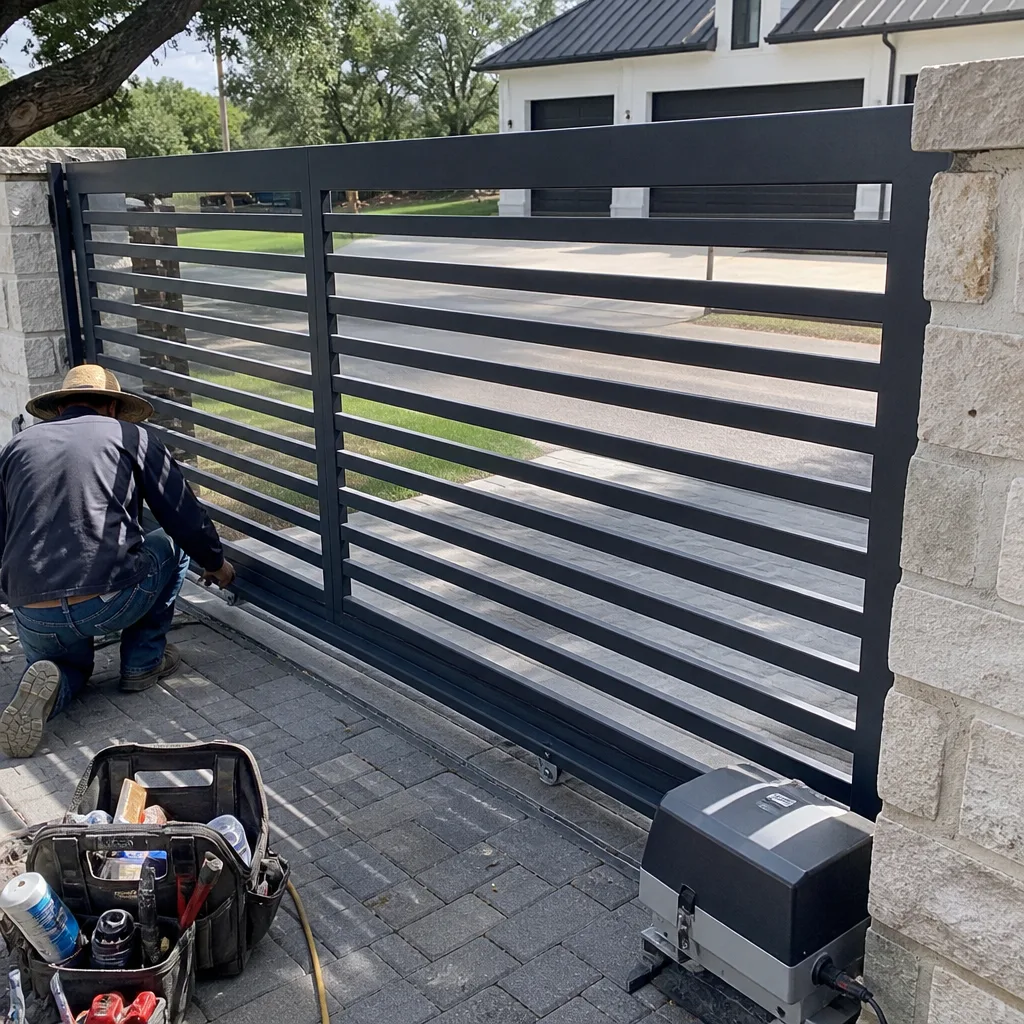 After
After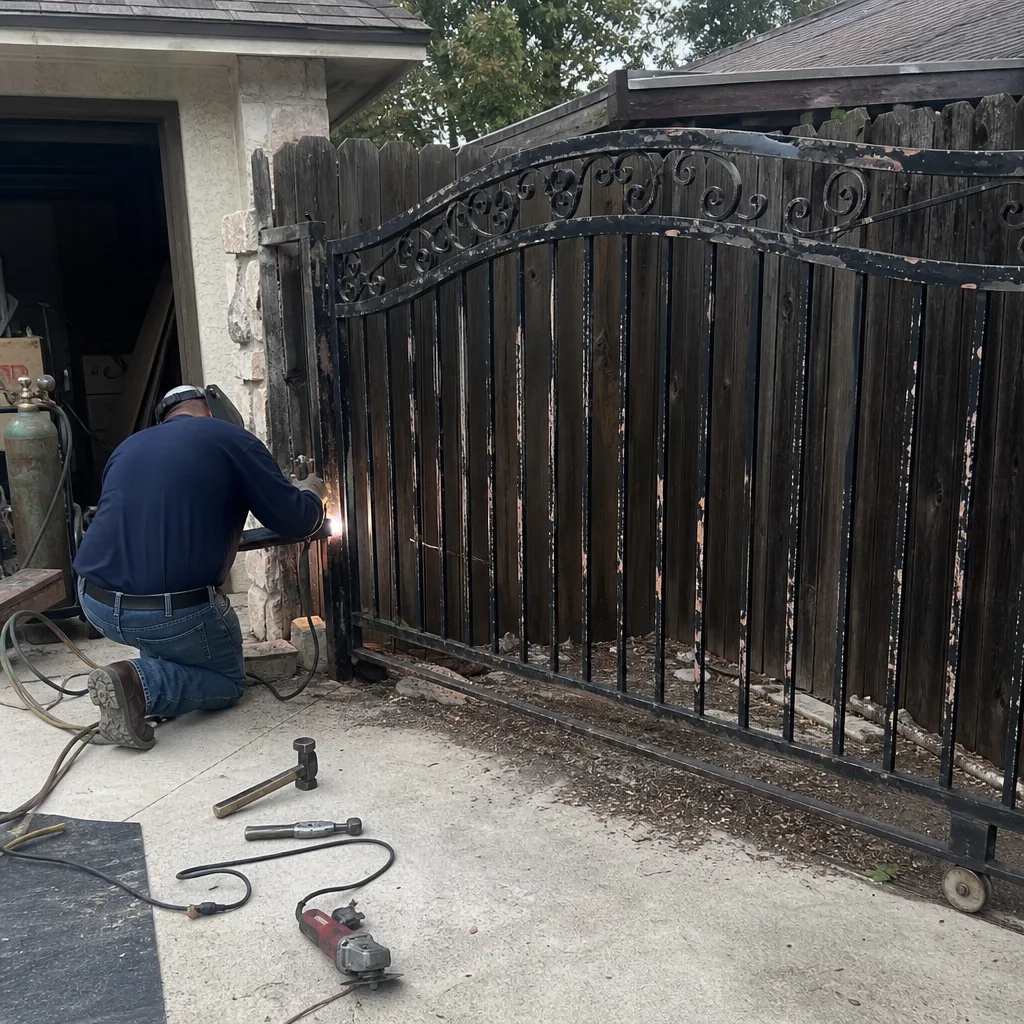 Before
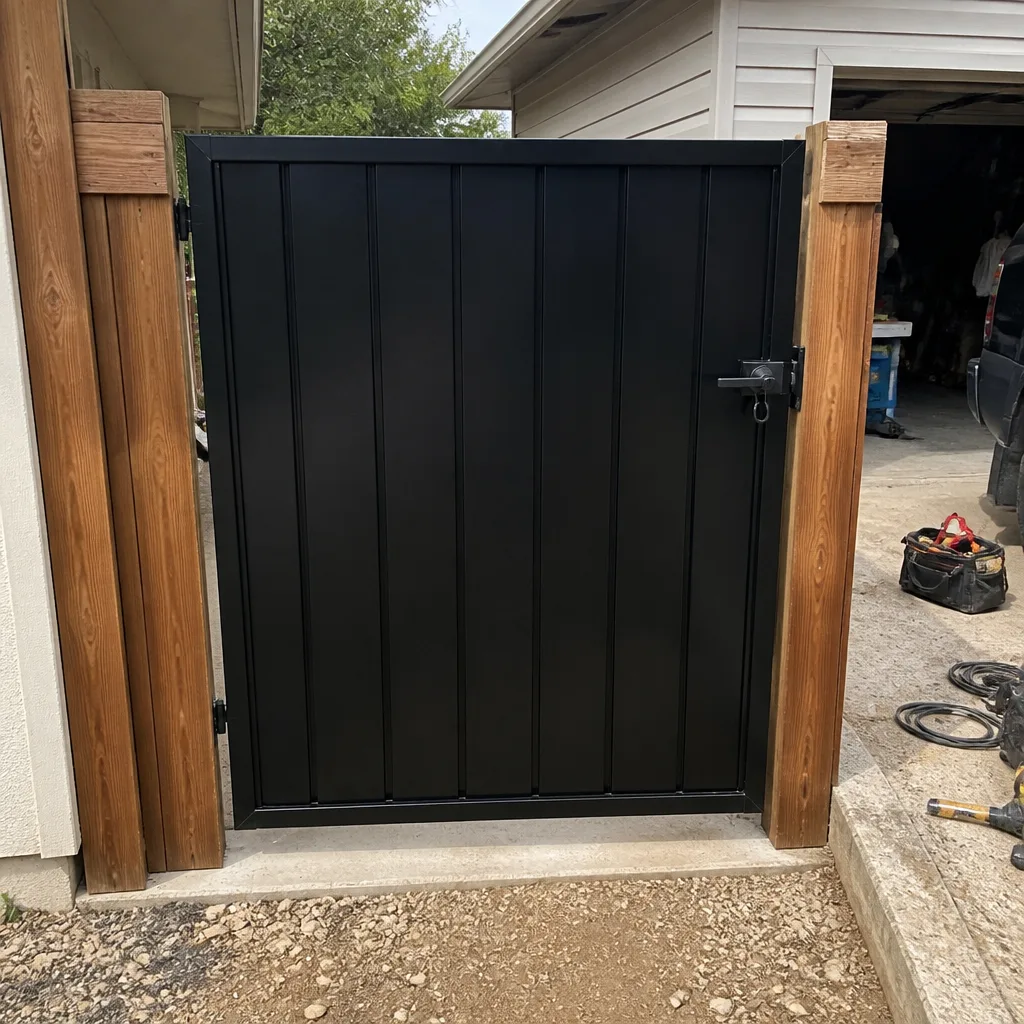 After
After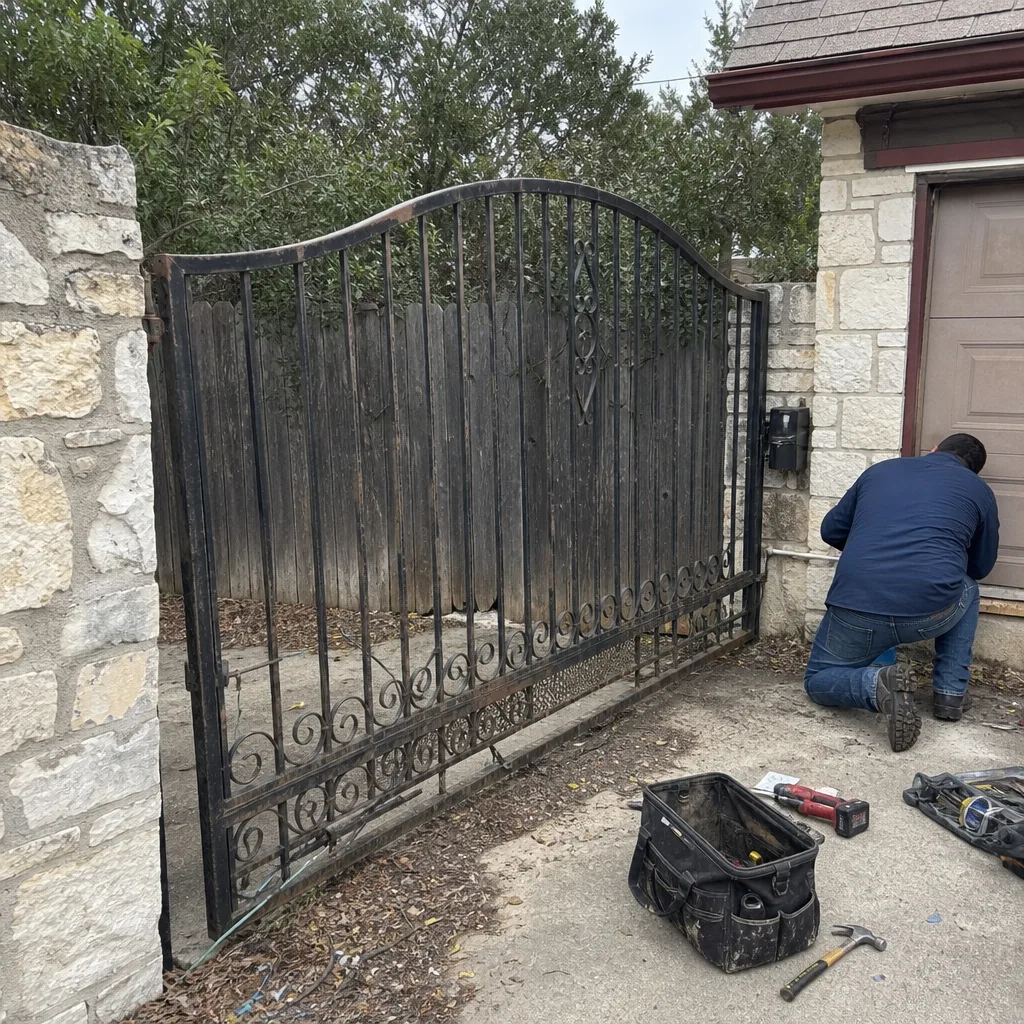 Before
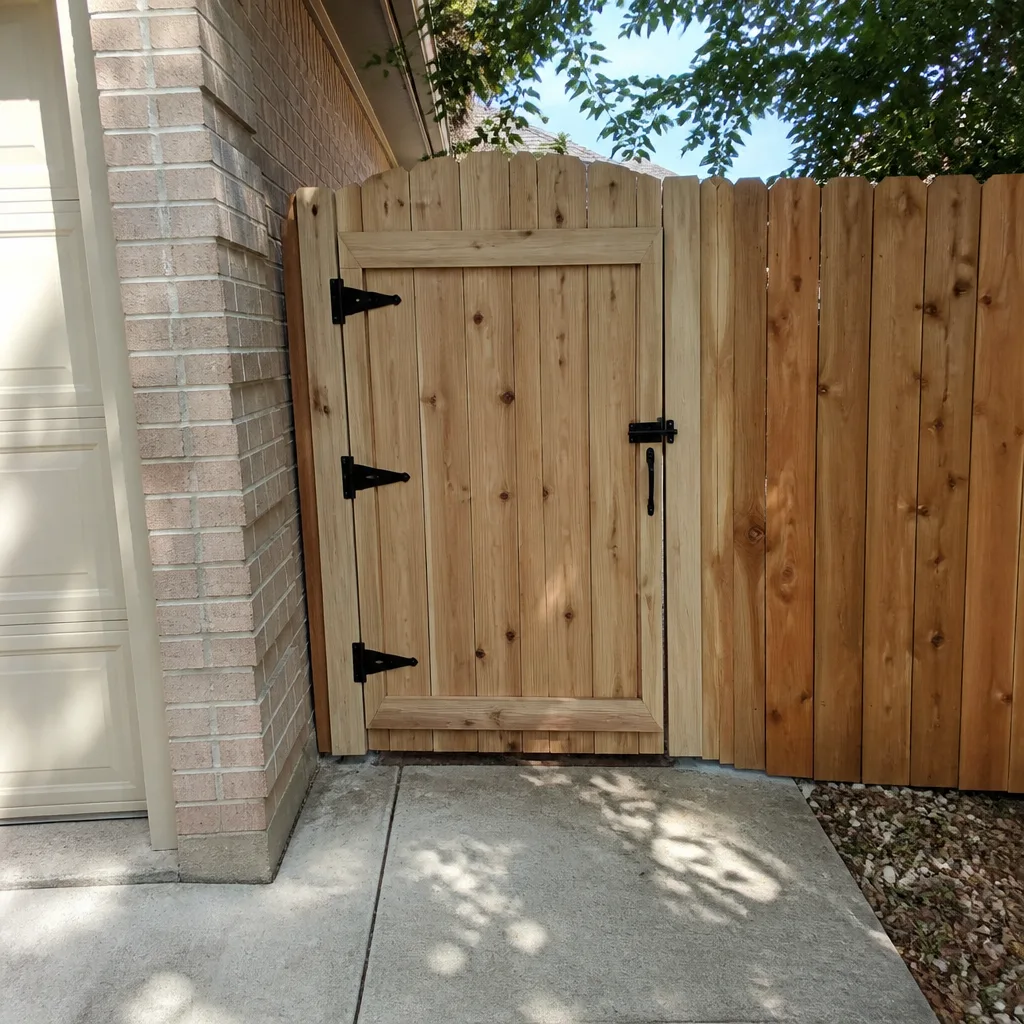 After
After