
Last updated October 17, 2026
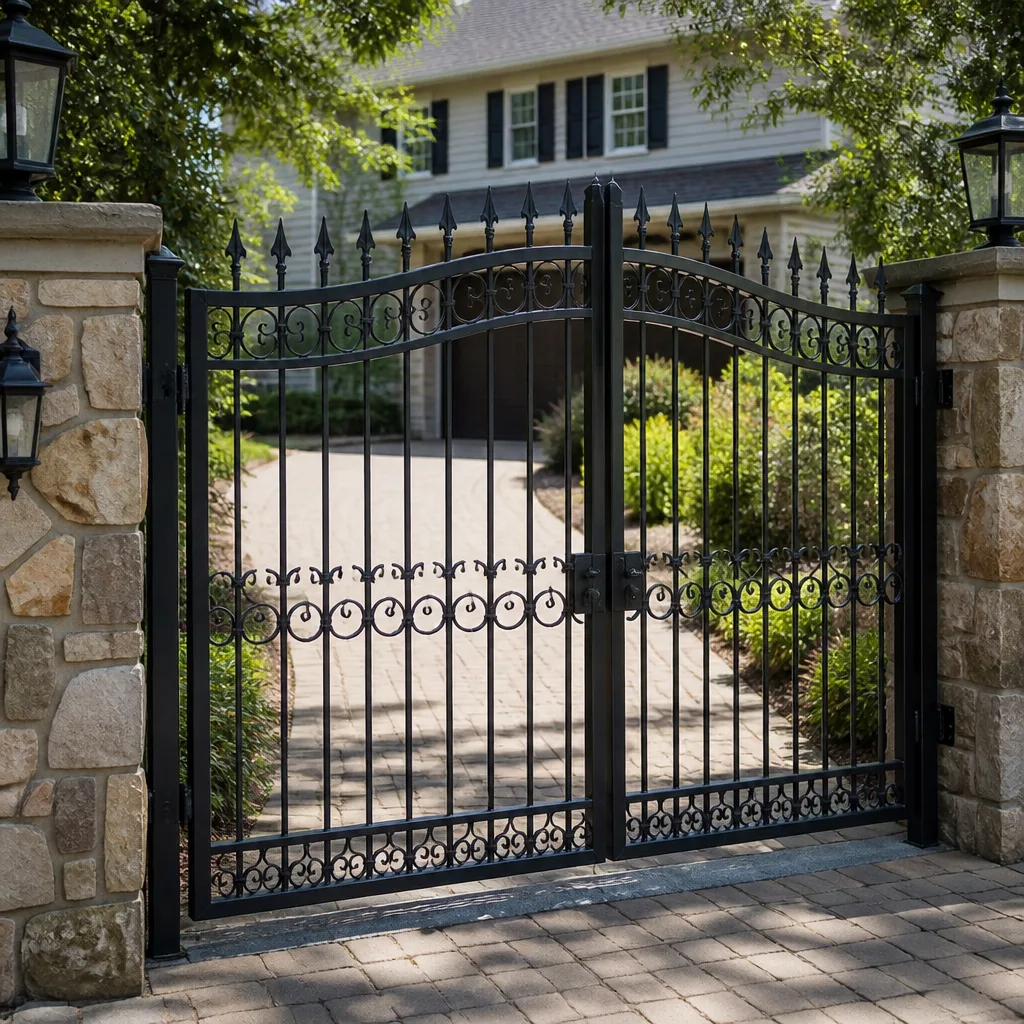 Wrought iron
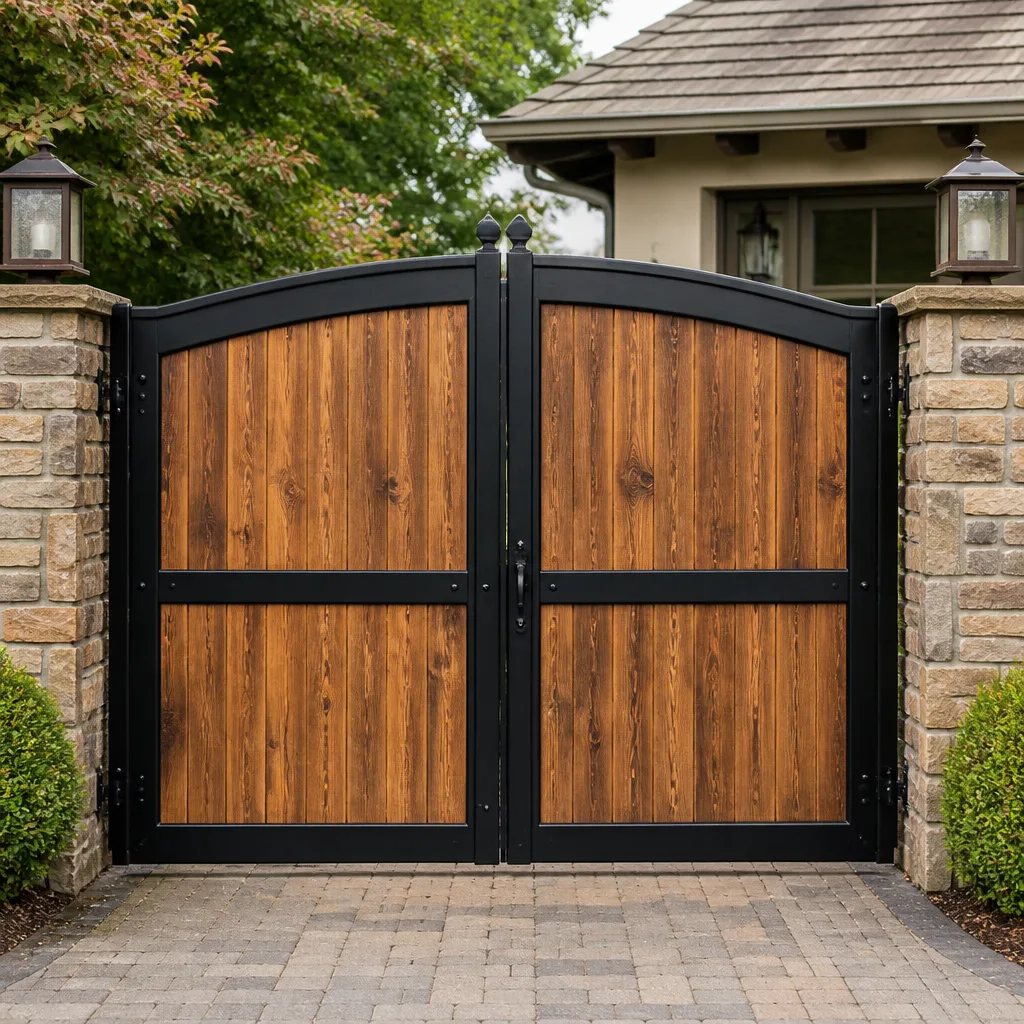 Wood & steel frame
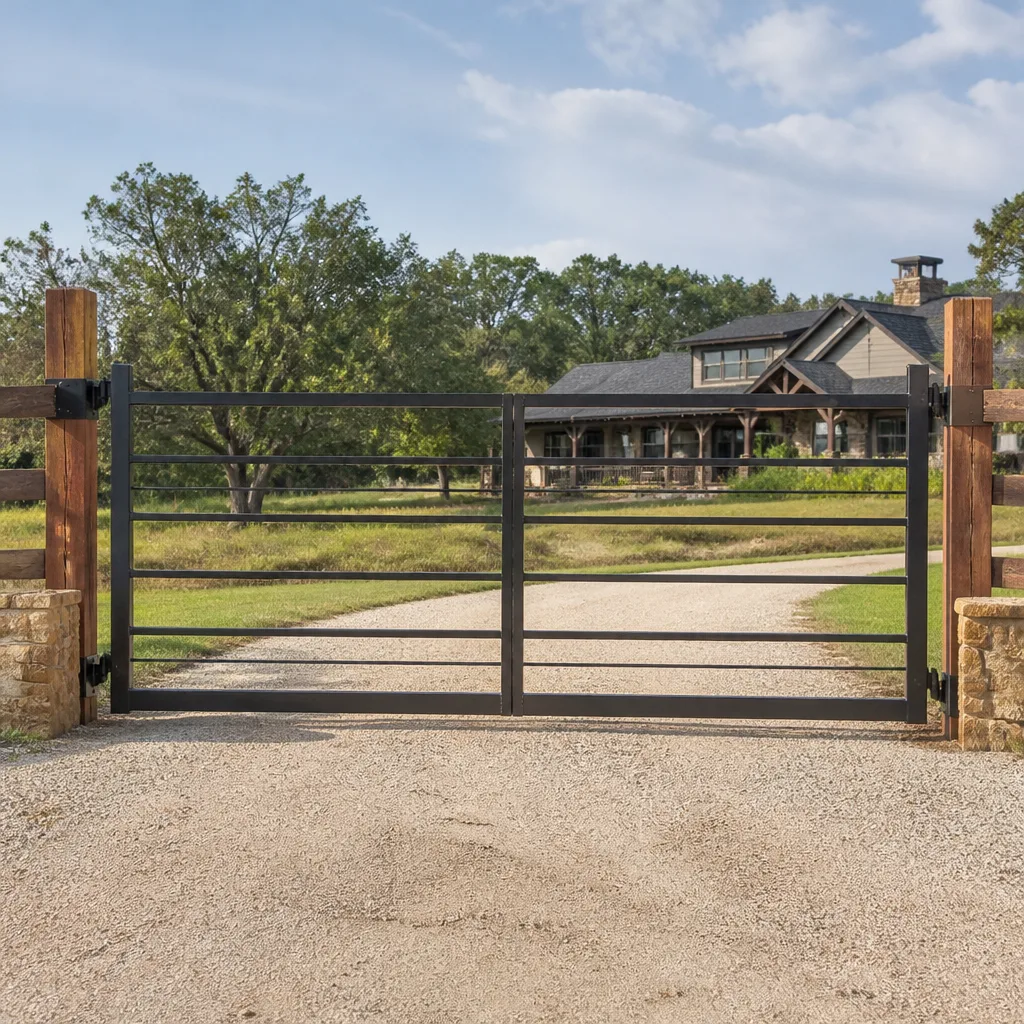 Farm & ranch
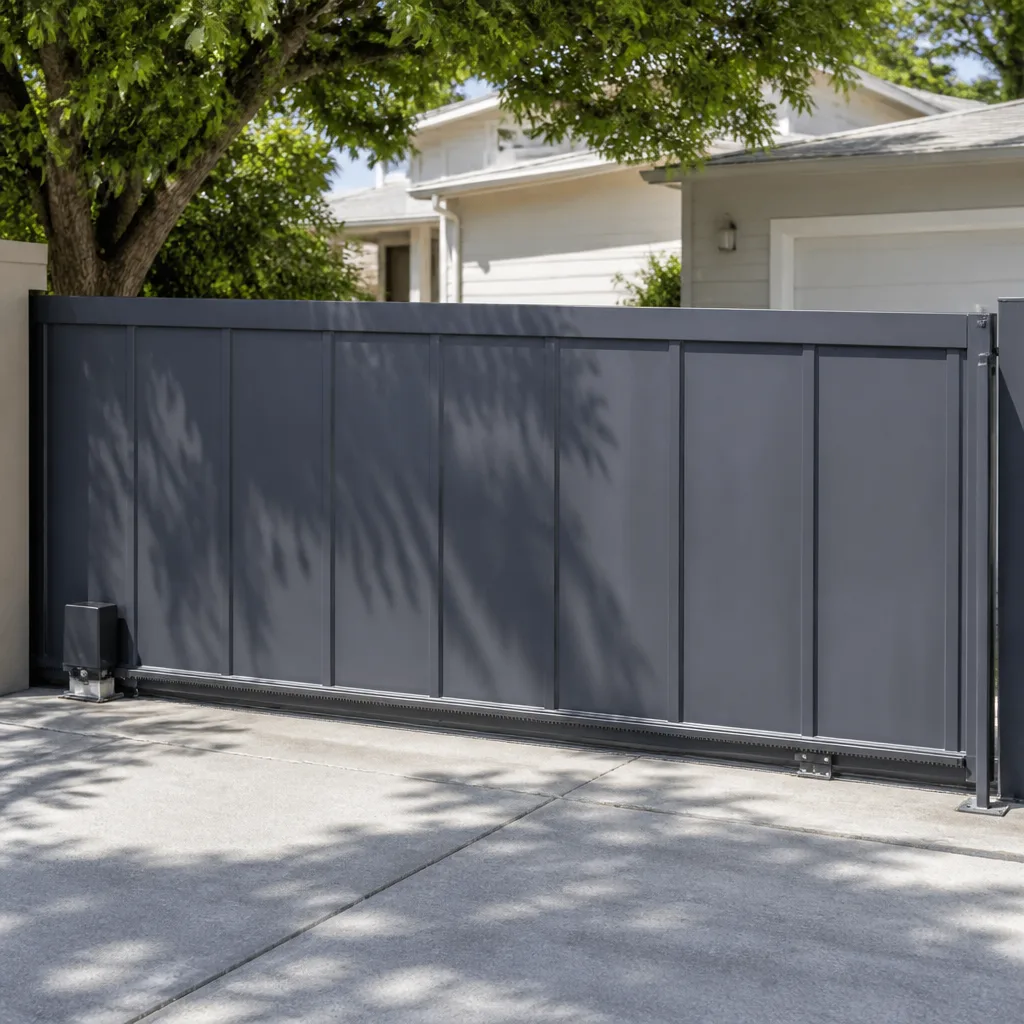 Sliding driveway gates
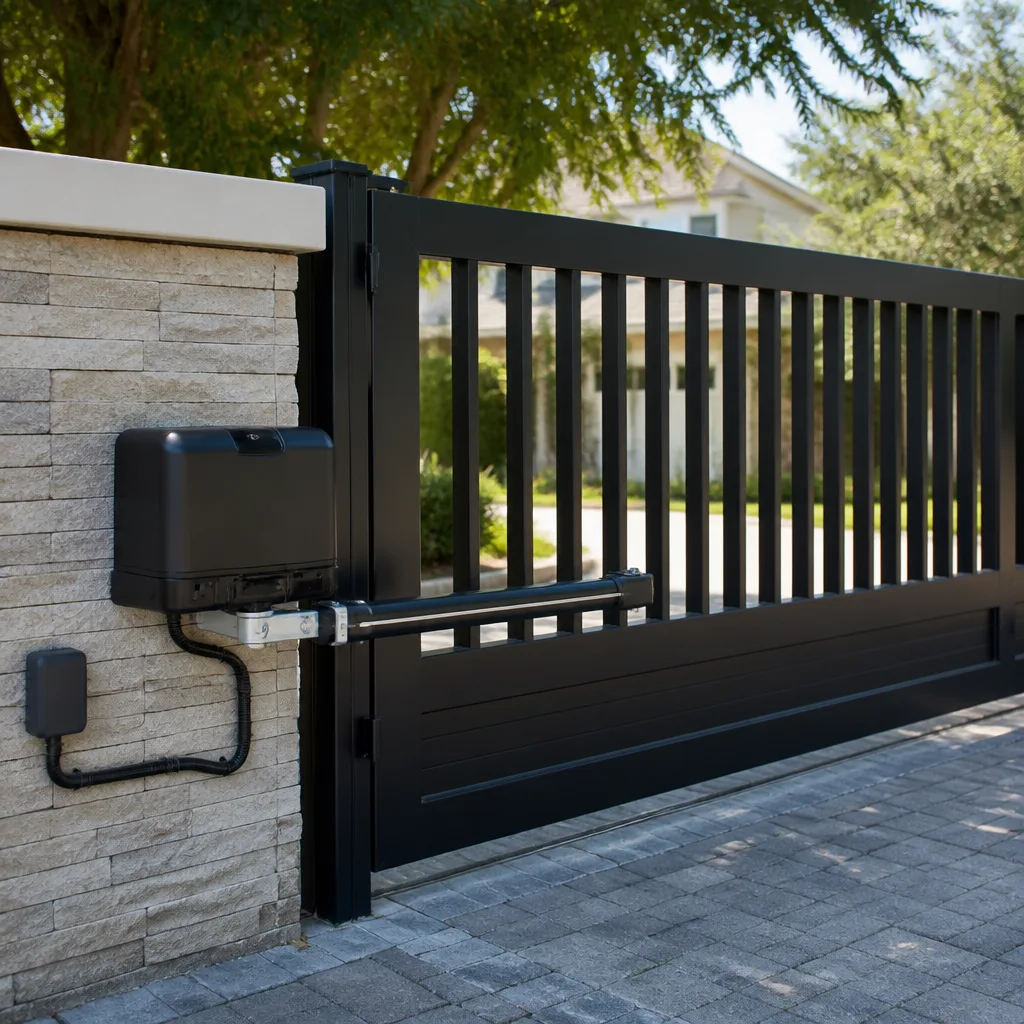 LiftMaster operators
Free on-site gate assessment - hinges, posts, and your LiftMaster or Nice gate operator checked before anything is quoted
The assessment is free and the quote is the invoice.
Get your free estimateSeasonal Gate Repair Care for San Antonio: Year-Round Homeowner’s Guide
The February 2021 freeze damaged more automatic gate operators in San Antonio than the previous five years of normal wear combined. The failure wasn’t the freeze itself. It was that most operators had degraded battery backups no one had tested since installation day. This guide maps the real damage calendar for San Antonio gates, month by month, so you can spend maintenance effort where it actually counts instead of spreading it thin across twelve months that don’t all matter equally. For a deeper dive, see The Complete Guide to Gate Repair in San Antonio.
Quick Answer
San Antonio’s climate creates two concentrated damage seasons for gates: summer heat above 100°F and occasional hard freezes. The smartest approach is to concentrate inspection and maintenance effort in May (pre-heat prep) and January (freeze prep and post-freeze inspection), with light monthly checks on the safety reverse sensor during peak summer, then use October and November for structural work like hinge wear and post-base moisture. Gates maintained on this schedule fail less often and cost less to repair than gates checked at random intervals.
Styles & brands we work with
Table of Contents
- Why San Antonio Has Two Damaging Seasons, Not Four
- January and February: Freeze Preparation and Post-Freeze Inspection
- March and April: The Safe Window
- May and June: Pre-Summer Heat Preparation
- July Through September: Peak Heat and the Monthly Sensor Test
- October and November: The Overlooked Maintenance Window
- San Antonio Clay Soil and Post-Base Inspection
- Common Mistakes to Avoid
- When to Call a Professional
- Frequently Asked Questions
Why San Antonio Has Two Damaging Seasons, Not Four
A gate in San Antonio does not experience spring and fall the way a gate in Ohio does. Spring and fall are real here, but they are short and mild. The two seasons that actually stress gate components are summer, which runs long and hot, and the occasional deep freeze that arrives without much warning in January or February. Everything else is a recovery window or a preparation window.
Summer heat above 100°F does three specific things to a gate system. It degrades capacitors inside the operator control board faster than any other season. It causes metal rails, hinges, and gate frames to expand enough that sensors calibrated in cooler weather drift out of alignment. And it bakes the UV-sensitive plastic components: wire insulation, safety edge strips, keypad housings, and the rubber seal at the bottom of a wood gate.
A hard freeze does something different. It attacks the battery backup inside the operator. Most San Antonio homes with automatic gates have a backup battery that keeps the gate working during a power outage. That battery sits inside the operator housing year-round. Heat shortens its life. Then a freeze arrives, and the battery, already weak from years of San Antonio summers, cannot hold voltage in cold temperatures. The gate operator fails to respond exactly when the homeowner needs it most: during freezing weather, when no one wants to get out of the car to open a gate by hand.
This is the core idea behind the seasonal rhythm in this guide. You do not need to inspect your gate every month. You need to inspect it in May, before heat arrives, and in January, before and after a freeze. You need one monthly test during peak summer. And you need one structural window in October and November. That is the whole calendar. We have been repairing gates in San Antonio since 2009, and we have seen this pattern hold across every neighborhood from Alamo Heights to Stone Oak to Helotes. If you need Gate Repair services, our team is available across the entire metro area.
January and February: Freeze Preparation and Post-Freeze Inspection
The February 2021 freeze taught San Antonio gate owners a hard lesson about battery backups. Most operators installed before 2021 had backup batteries that were never tested. When the freeze hit and power went out across the city, thousands of automatic gates simply stopped responding. Homeowners climbed out of cars in freezing rain to wrestle gates manually, and many discovered the manual release mechanism was seized from years of disuse.
Here is the January protocol we recommend, in order:
- Test the battery backup. Unplug the operator or flip its breaker, then activate the gate with the remote or keypad. If the gate moves at normal speed, the battery is holding charge. If it moves slowly, beeps, or does not move at all, the battery needs replacement before any freeze arrives. On most LiftMaster, FAAC, and BFT operators, batteries last three to five years in San Antonio’s heat, less if the operator sits in direct afternoon sun.
- Check the manual release. Pull the release handle or keyed release once, confirm the gate swings or slides freely by hand, then re-engage. If the release is stiff, lubricate the mechanism with a dry silicone spray, not WD-40. WD-40 attracts dust and gums up in cold weather.
- Inspect the gate’s path. Frost and freezing rain make gate tracks slick and can cause a sliding gate to bind. Clear leaves, gravel, and debris from the rail. Check that no tree branch has sagged into the gate’s swing path.
- Look at the hinges and bolts. Cold contracts metal. A hinge bolt that was snug in October can be slightly loose in January. A quarter-inch of play at the hinge becomes a sagging gate by spring if left alone.
After any freeze event, run the same four checks again within 48 hours. The freeze itself is not usually what breaks a gate. It is the weakened battery that gave out when temperatures dropped below about 25°F. Most battery failures show up in the days after the freeze, not during it. If your gate operator is a Ghost Controls, Viking, Elite, or DoorKing unit more than four years old, and you have never replaced the backup battery, January is the month to do it.
For a deeper look at what repair work San Antonio gates typically need, see our Gate Repair in San Antonio page, which covers common failure points across all seasons.
March and April: The Safe Window
March and April in San Antonio are the closest thing to a maintenance vacation for your gate. Temperatures are moderate, rain is occasional, and the ground is not yet baked dry. This is the season when gates that survived the winter, or limped through a freeze, tend to work normally. Homeowners notice few problems, and that is exactly the point.
There are two things worth doing in this window, and neither is urgent:
- Wash the gate. Not for appearance. For function. Pollen, dust, and the film from winter rain collect on gate hinges, tracks, and sensor lenses. A soft brush and a bucket of mild dish soap removes the grit that would otherwise grind into hinge pins and slide rails during summer. Rinse thoroughly and let the gate dry before operating.
- Watch for swelling signs on wood gates. Spring humidity in San Antonio can cause a wood gate to swell slightly against its frame. If the gate scrapes or sticks now, note where it rubs. October is the right time to plane or adjust it, not now, because the wood will shrink again in summer heat.
One caution for this window: do not schedule major gate work in March or April thinking you are “getting ahead of it.” The components most likely to fail in summer, particularly capacitors and sensor alignments, cannot be meaningfully protected in April. Capacitors degrade from sustained heat exposure, not from sitting idle in spring. The May prep work described below is the correct pre-summer action.
If you are considering a new gate or replacing an old one, spring is a perfectly good time to plan that project. A new gate installed in March or April has months of mild weather to settle before the heat arrives. See our Gate Installation in San Antonio guide for what to expect on a full installation.
May and June: Pre-Summer Heat Preparation
May is the most important maintenance month on the San Antonio gate calendar. The work you do in May determines whether your gate makes it through July without a malfunction. Three components deserve attention before sustained temperatures climb past 95°F: capacitors, ventilation clearance, and UV-exposed seals and wiring.
Capacitors. The capacitor is the component inside the operator control board that gives the motor its starting jolt. Heat is the capacitor’s enemy. A capacitor that has been in service for four or more San Antonio summers may work fine in May and fail in August, because sustained heat degrades the dielectric material inside. You cannot inspect a capacitor visually without opening the control board, which we do not recommend for homeowners, especially on gate operators where the control board carries live voltage even with the gate closed. What you can do is note the age of your operator. If it is more than five years old and has never had a capacitor replaced, and it sits in a south-facing or west-facing enclosure that catches full afternoon sun, consider having a professional test it in May rather than discovering the failure in July.
Ventilation clearance. Gate operators generate heat when they run, and in San Antonio they also absorb heat from the sun. If the operator housing sits inside a metal or plastic enclosure box, that box needs airflow. In May, walk to your operator and check: has a shrub grown up around the enclosure since last year? Has a pile of mulch, a storage bin, or a trash can migrated next to it? Cut back vegetation at least 18 inches on all sides. Clear anything leaning against the enclosure. A gate operator in a tightly enclosed space can run 20 to 30 degrees hotter than one with open air around it, and that temperature difference is often the difference between a capacitor that survives summer and one that does not.
UV damage to seals and wiring. San Antonio sun is hard on plastic. The rubber seal along the bottom of a wood or ornamental gate dries and cracks after two to three summers of direct exposure. The plastic insulation on low-voltage wiring, especially where it exits conduit and runs to keypads and safety edges, turns brittle and can split. In May, run your hand along visible wiring (with the operator power off) and look for cracks, chalkiness, or exposed copper. Check the gate’s rubber seal for splits. Replacing a cracked seal in May costs less than repairing water and insect damage to a wood gate’s bottom rail after a summer of storms.
This is also the month to confirm the gate’s auto-close function still works correctly if your system has one. A gate that slams shut too quickly in summer can injure a child or pet. The closing force and speed should be checked and adjusted with the heat in mind, since expansion changes how the gate moves in its track.
If your gate has an electric operator that needs attention, our Electric Gate Repair in San Antonio page explains how we diagnose and fix operator problems, including capacitor and battery work.
July Through September: Peak Heat and the Monthly Sensor Test
During July, August, and early September, San Antonio’s heat does something specific to automatic gates: thermal expansion shifts the calibration of the safety reverse sensor. This is the component that detects an obstruction, a child, a dog, a garbage can, and reverses the gate before it can crush or pin anything. Most homeowners never think about this sensor until it either fails to reverse and someone gets hurt, or it reverses constantly for no reason and the gate refuses to close.
The sensor sits on the gate edge or the operator rail, depending on the system. In extreme heat, the metal and plastic components expand at slightly different rates. A sensor that was perfectly calibrated in May can be half an inch out of position by August. The result is a gate that either reverses on nothing, or worse, fails to reverse on something real.
Here is the monthly July-through-September test, which takes three minutes:
- Open the gate fully.
- Stand clear of the gate path and activate the close function.
- As the gate closes, place a rolled-up towel or a plastic trash can lid in the gate’s path.
- Watch whether the gate reverses within a second of contacting the object.
- If the gate stops but does not reverse, or pushes through the object, call a professional before operating the gate again.
- Test both directions if your gate is a slide system that can travel both ways.
Do this test once a month in July, August, and September. It is the single highest-value safety check a San Antonio gate owner can do, because the failure mode is silent. A gate that will not open is annoying. A gate that will not reverse is dangerous. And the sensor is the one component most directly affected by San Antonio’s summer heat.
We also recommend reducing the general inspection interval during these three months. You do not need to check everything monthly. Just the sensor, the gate path for debris, and the area around the operator enclosure for grown-in vegetation. If the gate starts making a new sound, a grinding, a whine, a clunk, note it and call. New sounds in peak heat are often the early stage of a capacitor or motor problem.
For gate work during this period, know that Latch and Post Gate Repair San Antonio home service calls are answered by a live person 24/7, including July afternoons when the pavement is too hot to touch. We schedule around the heat when possible, which matters for both the technician and the equipment.
October and November: The Overlooked Maintenance Window
Most San Antonio homeowners ignore their gates in October and November. The weather is pleasant, the gate is working, and no one is thinking about gates. This is a mistake. October and November are the best months of the year for structural gate work, because the conditions are ideal and the winter clock is ticking.
Here is what this window is for:
- Wood gate swelling and sticking. By October, a wood gate that absorbed moisture during spring rains and summer thunderstorms has often swollen against its frame. The wood is not going to shrink again until the following dry spring. October is the time to plane down the rubbing edge, re-align the hinges, or adjust the latch plate so the gate closes without forcing. In our experience across San Antonio neighborhoods like Terrell Hills and Olmos Park, October is when we see the highest volume of “my wood gate won’t close anymore” calls.
- Hinge wear replacement. Hinges wear all summer from thermal cycling and daily use. A hinge that has been slowly degrading for months reaches a tipping point in fall. Replacing a worn hinge in October is a 30-minute job. Replacing a hinge that seized and tore the gate post out of alignment in January is a much bigger job. Listen for squeaks and look for visible play at the hinge when the gate is halfway open. If the gate sags even half an inch toward the latch side, the hinges need attention now.
- Post-base moisture inspection. San Antonio’s fall rains arrive before winter, and water is the enemy of the gate post’s base. Walk the gate’s posts and look for soil that has washed away from the base, standing water, or cracking in concrete footings. This is the moment to catch early post lean, before freeze-thaw cycles in January and February widen the crack.
- Lubrication before cold weather. A dry silicone lubricant applied to hinges, latch mechanisms, and slide rails in November keeps the gate moving smoothly through the cold months. Do not use grease or WD-40. Grease traps grit and hardens in cold. Silicone stays fluid and repels moisture.
This window is also the right time to schedule a full professional inspection if you have not had one in the past year. A thorough fall inspection identifies hinge wear, post lean, sensor calibration drift, and operator issues before winter, when failures are more inconvenient and harder to fix.
San Antonio Clay Soil and Post-Base Inspection
San Antonio sits on expansive clay soil, and that soil moves. It swells when wet and shrinks when dry, and it does both on a seasonal rhythm. Your gate posts sit in this soil, or in concrete footings poured into it, and the movement of the surrounding clay is the single most common cause of gate post lean in the San Antonio area, ahead of wind and collision damage.
Here is what happens: during wet periods, the clay expands and presses against the concrete footing. During dry periods, the clay contracts and pulls away, leaving small gaps around the footing. Over years of wet-dry cycles, the footing loses its bond with the surrounding soil. The post begins to lean. At first it is imperceptible. The gate still opens and closes. The latch still catches. Then, one month, the gate starts scraping. The latch misses. The gap between gate and post widens at the top. That is the moment most homeowners call us.
The expensive version of this problem is a full post re-set: the gate is removed, the old footing is broken out, a new footing is poured, the post is re-set, and the gate is re-hung. In San Antonio, that job commonly lands in the $700 to $1,200 range depending on gate size and post type. The cheaper version is catching the lean early, before the post shifts more than an inch or two, and addressing the soil issue with drainage correction or stabilization before a full re-set becomes necessary.
Here is the post-base inspection to do every October, November, and again after any extended heavy rain:
- Stand at one end of the gate and sight down the line of the gate frame. Compare the gap between the gate’s top edge and the adjoining post or wall with the gap at the bottom. If the gap differs by more than half an inch, the post has moved.
- Walk around each post and look for a visible gap between the post or its footing and the surrounding soil. A gap wider than a pencil indicates the clay has contracted away from the footing.
- Look for cracking in any exposed concrete footing, especially hairline cracks that run vertically.
- After heavy rain, check whether water pools against the post base. Standing water against a footing is a sign that drainage has changed, and clay soil becomes soft and muddy when saturated.
- Push gently against the gate near the latch side. A healthy gate should not shift perceptibly at the post. If you feel movement at the post base, the footing or the soil beneath it has loosened.
If any of these checks shows movement, have a professional look at the post before the next freeze. A post that is already leaning will be pushed further by frozen, expanding soil, and January is the month when a leaning post becomes a non-functional gate. The cost to stabilize a mildly leaning post is a fraction of the cost to re-set one that has shifted several inches.
Common Mistakes to Avoid
- Testing the backup battery only during a power outage. By the time the power goes out during a freeze or a summer storm, the battery has already been degraded by heat for years. Test it in January, every year, regardless of the weather. A battery that fails the January test fails in your driveway, not during the next freeze.
- Lubricating with WD-40. WD-40 is a water displacer, not a lubricant for gate hardware. It attracts grit, gums up in cold weather, and washes off in rain. Use dry silicone spray on hinges, latches, and slide rails. This one mistake causes more seized hinges in San Antonio than any other single error.
- Ignoring a gate that reverses on empty air. When a gate reverses for no visible reason, homeowners often assume it is a nuisance sensor problem and keep using it. The sensor may be out of calibration from thermal drift, but it may also be detecting a real obstruction you cannot see, like a child’s toy or a pet behind the gate. Treat every unexplained reversal as a sensor that needs inspection, not a quirk.
- Watering grass right against the gate post. In San Antonio’s clay soil, irrigation spray hitting the post base adds moisture that makes the soil swell and then shrink as it dries. Aim sprinkler heads away from gate posts, and keep the base area free of standing water.
- Waiting until the gate stops working to call. Gates almost always warn before they fail. A new sound, a slower open, a scrape, a sag, a latch that barely catches. These warnings appear weeks or months before full failure. Addressing the warning in May or October is cheaper than addressing the failure in July or January.
- Doing structural work during the wrong season. Wood gates that stick in spring should not be planed in spring, because the wood will shrink in summer and the gate will rattle. Hinges that are worn in August can usually wait until October. Knowing which jobs belong in which window is the difference between a repair that lasts and one that needs redoing.
When to Call a Professional
Some gate work is safe for a careful homeowner. Cleaning, lubricating, testing the sensor, and inspecting for visible wear are all within most people’s reach. Other work is not. Not sure which category your project falls into? Read our DIY vs Professional Gate Repair: The San Antonio Homeowner’s Decision Guide. If your gate operator’s control board needs opening, the capacitor needs testing or replacement, the post has visible lean, the hinges are pulling out of the wood or metal, or the safety sensor fails the monthly test, call a professional. Gate operators carry live voltage even when the gate is not running, and high-tension gate springs and heavy gate panels can cause serious injury if mishandled. Latch and Post Gate Repair San Antonio offers free estimates in San Antonio, technicians are background-checked and uniformed, and every visit includes a written price before any work starts. Call (325) 252-5195 to schedule.
Frequently Asked Questions
Twice a year for a full inspection, May and January, plus a three-minute monthly safety sensor test during July, August, and September. That schedule covers the two damaging seasons and the specific failure modes San Antonio’s climate produces. If your gate is more than ten years old or carries heavy daily traffic, add an October structural check.
Cold does not kill the battery. San Antonio summer heat degrades it over several years, and then a hard freeze below about 25°F exposes the weakness. A backup battery that has survived three or more San Antonio summers should be load-tested every January, because the failure arrives during the first freeze after the battery has quietly lost capacity.
Gate spring replacement in San Antonio typically runs between $150 and $350 depending on the gate’s size and spring type, and operator capacitor replacement usually lands between $120 and $280 including the part. The exact number for your gate is quoted in writing before any work begins. Call (325) 252-5195 for a free estimate.
Yes. Every Latch and Post technician follows the Cedarwell C.A.R.E. values on every visit: clean up like it is our own home, ask before we move or touch anything, respect the family’s time and quiet hours, and explain the price before the work. Shoe covers and drop cloths are standard, and our technicians take a photo of the clean-up before they leave, at no extra charge.
Test the battery backup by unplugging the operator and running the gate, confirm the manual release operates smoothly, clear the gate path of debris, and check hinge bolts for looseness. Run the same four checks again within 48 hours after the freeze. If the gate will not operate on battery power or the release is stuck, schedule service before the next cold front.
Our technicians are factory-trained on the brands San Antonio families most often own, including LiftMaster, FAAC, BFT, Linear, Viking, Ghost Controls, DoorKing, Elite, and Mighty Mule. If your operator is one of these, we can diagnose and repair it. If you are not sure of your operator’s brand, the model label is usually on the inside of the control box cover. Call (325) 252-5195 and a live person will help you identify it.
The Bottom Line
San Antonio gates fail on a predictable schedule. The two damaging seasons are summer, when heat degrades capacitors and shifts sensor calibration, and the occasional hard freeze, when weakened backup batteries give out. The safe windows are March and April, when little maintenance is needed, and October and November, when structural work on hinges, wood swelling, and post bases should be done. Concentrate your effort in May and January, test the safety sensor monthly during peak heat, and check the post base every fall. That is the entire seasonal rhythm. For anything beyond routine inspection, Latch and Post Gate Repair San Antonio is available at (325) 252-5195, with a live person answering around the clock and a written price before every job. Visit our more guides & resources for additional gate maintenance tips.
Written by Cody Beckman, Owner at Latch and Post Gate Repair San Antonio, serving San Antonio since 2009.
See the difference
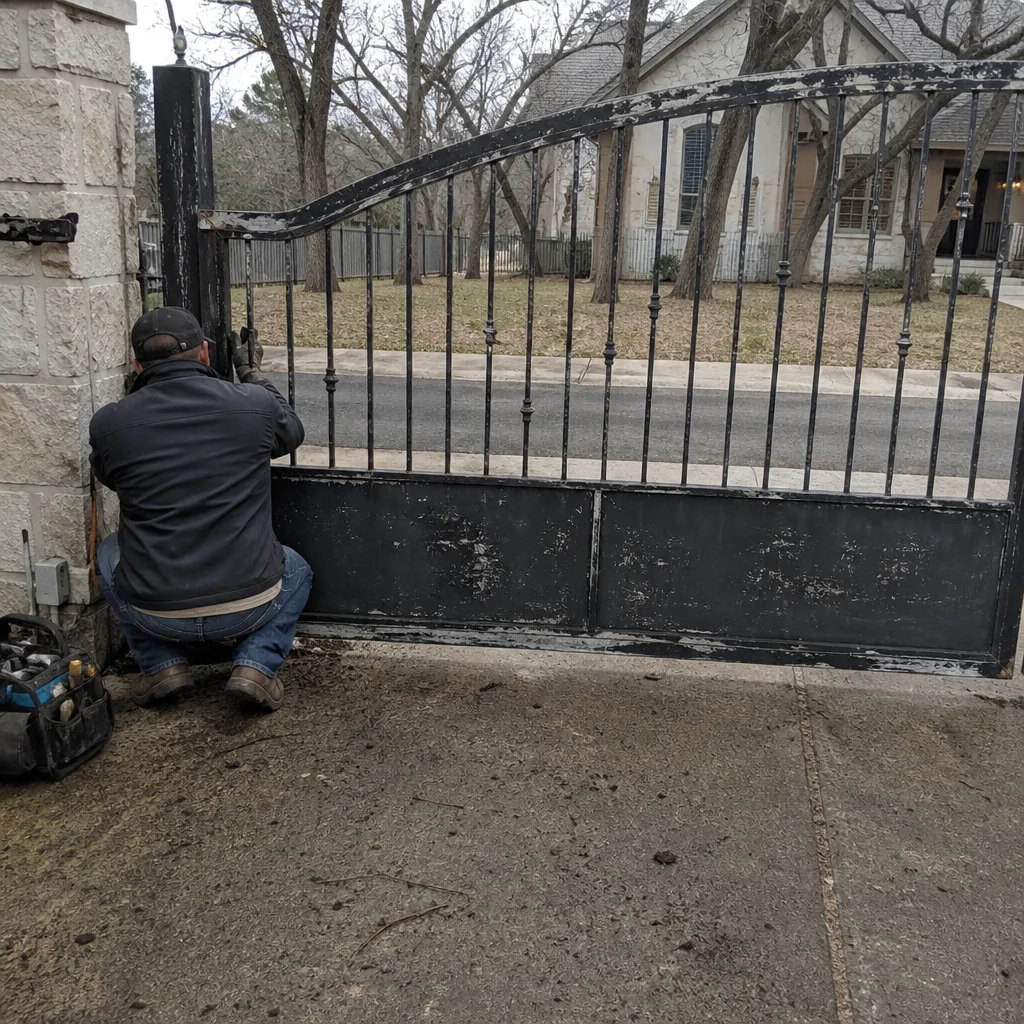 Before
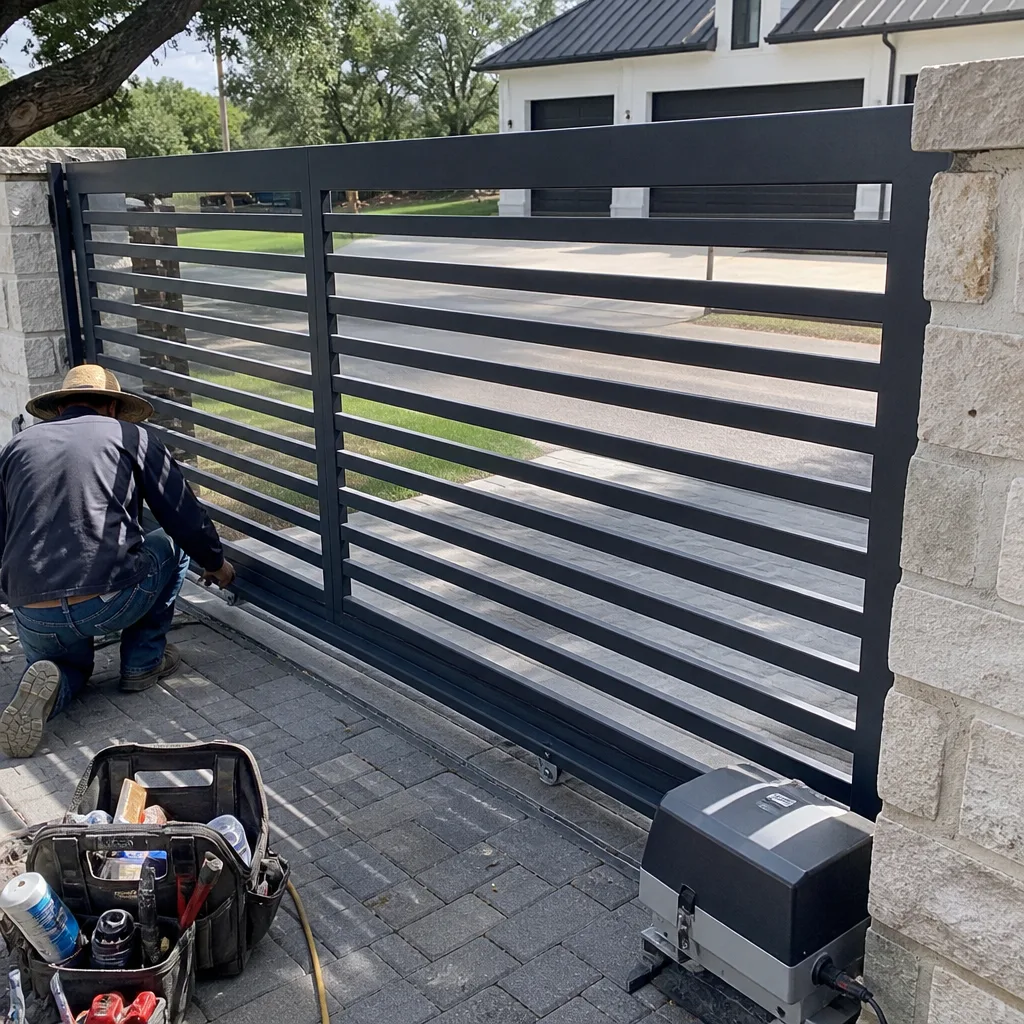 After
After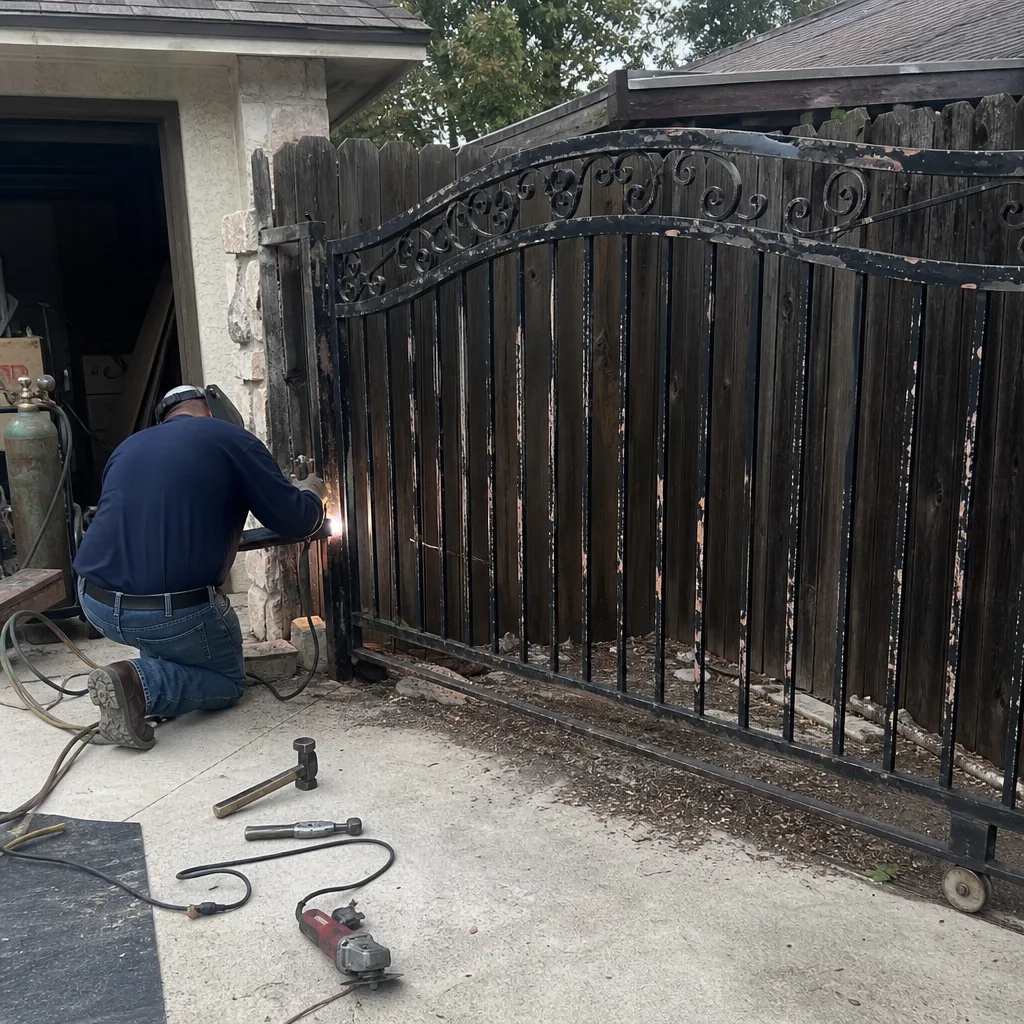 Before
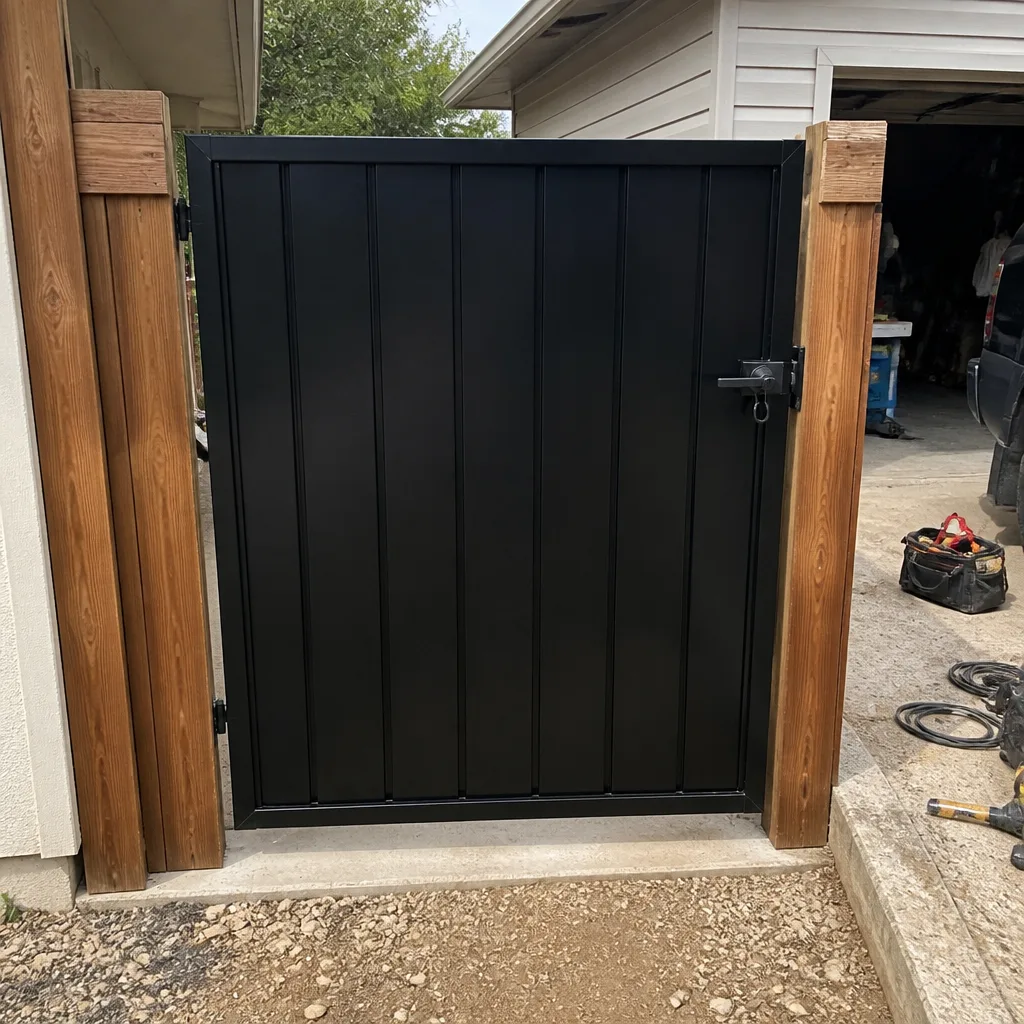 After
After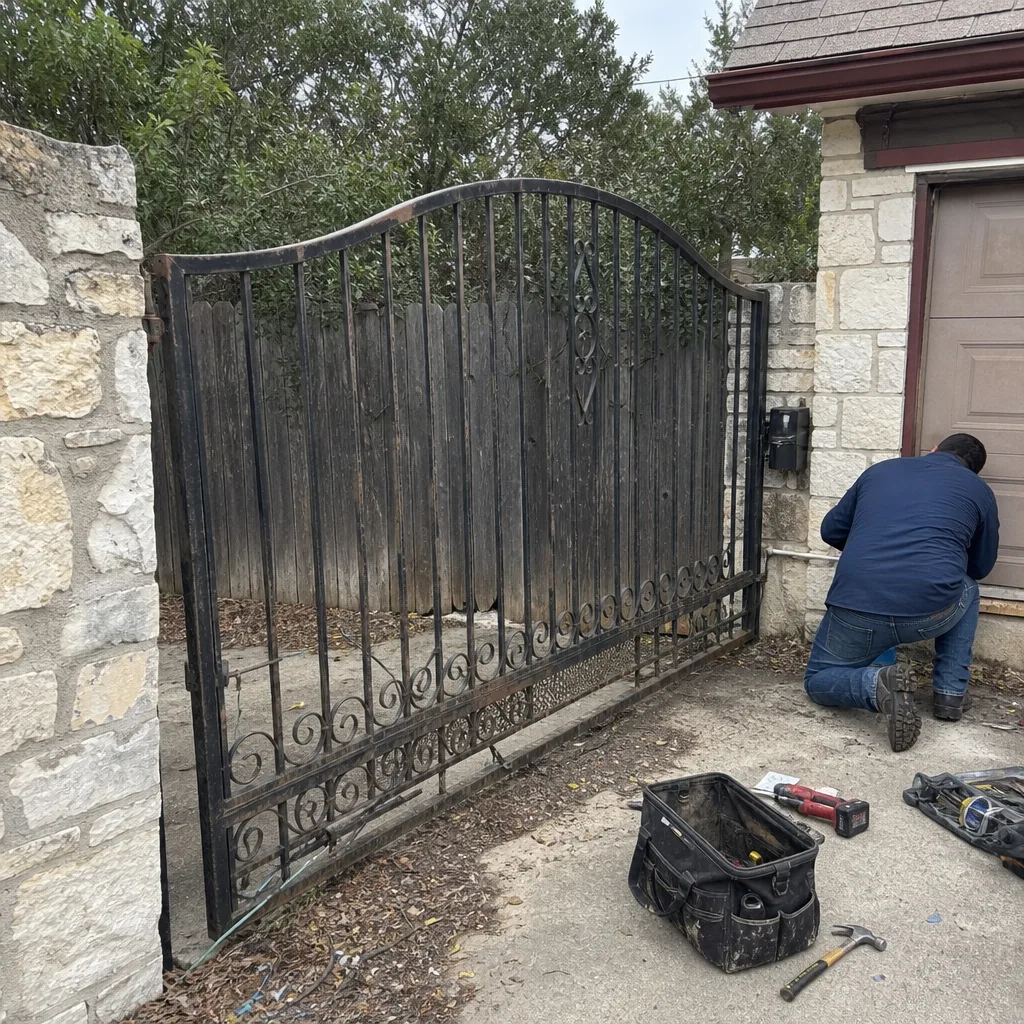 Before
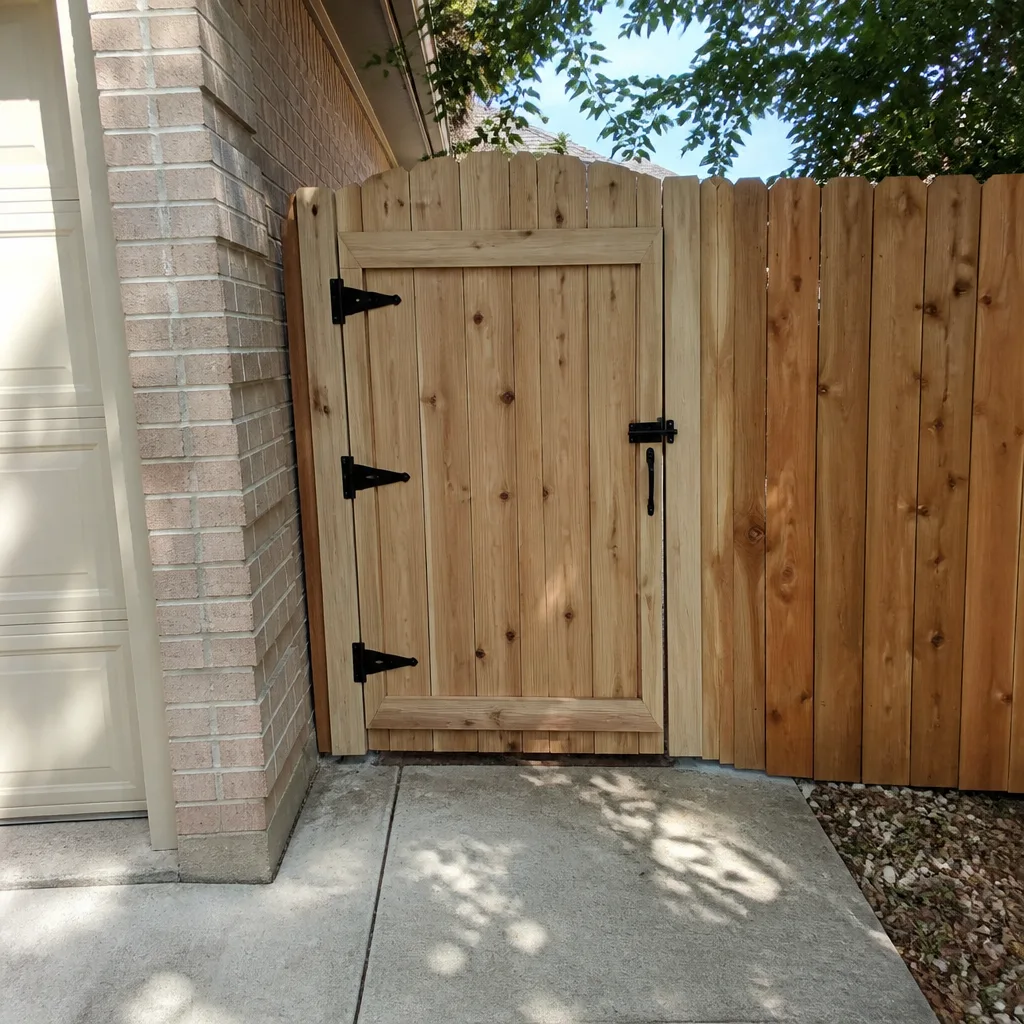 After
After