
Last updated October 17, 2026
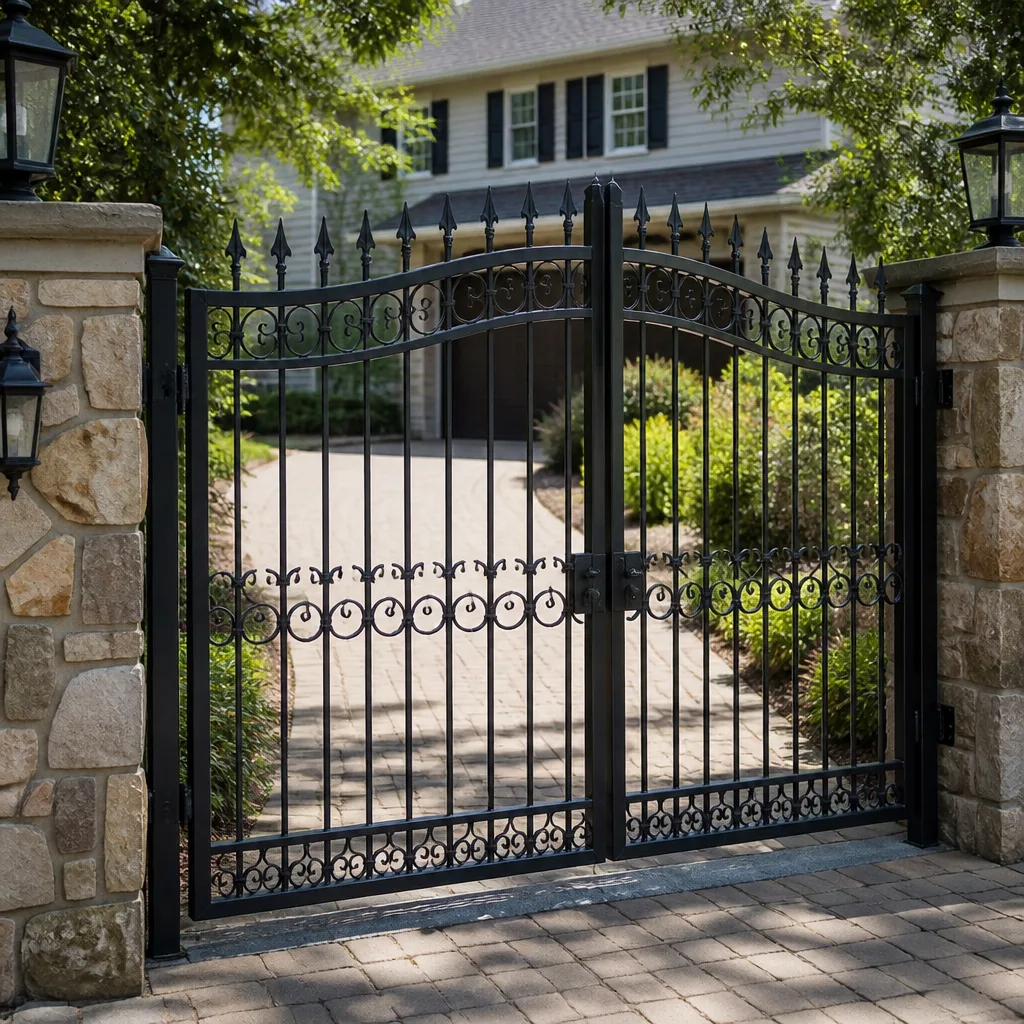 Wrought iron
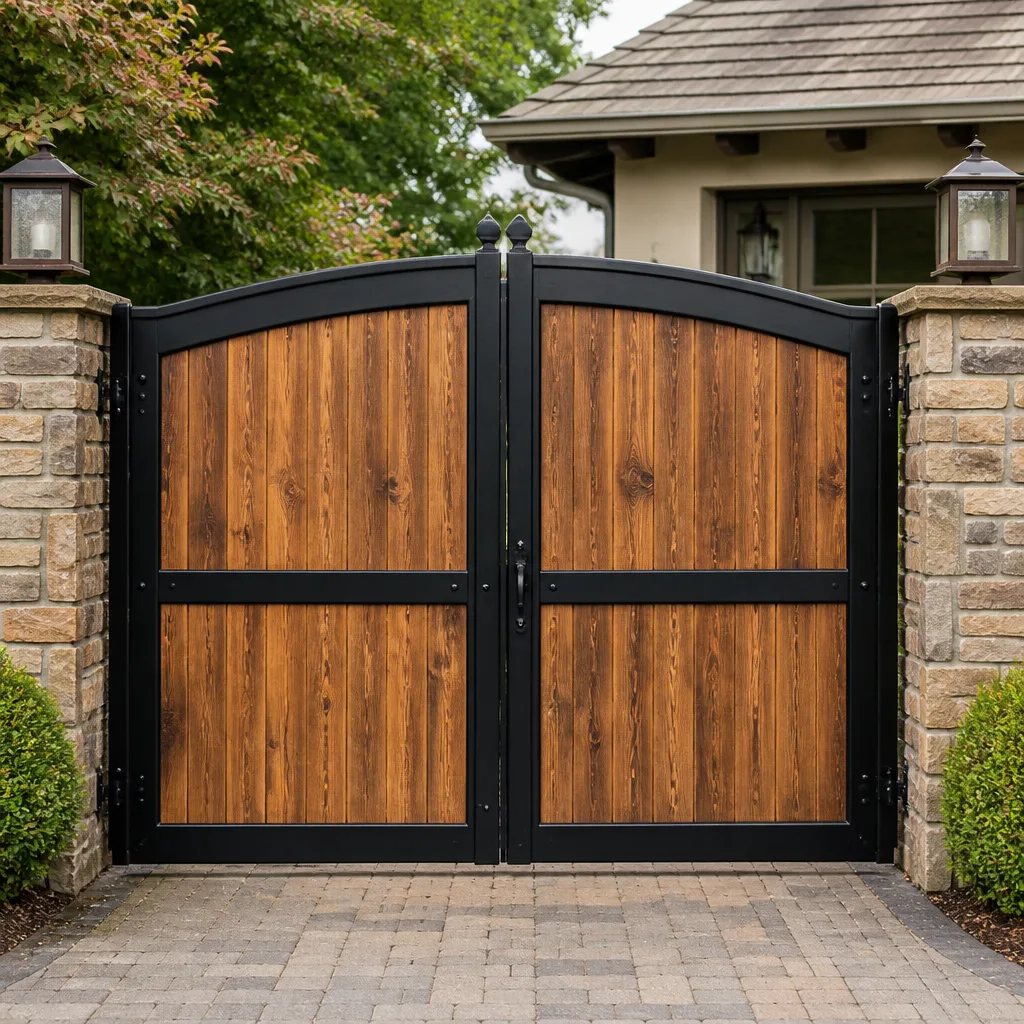 Wood & steel frame
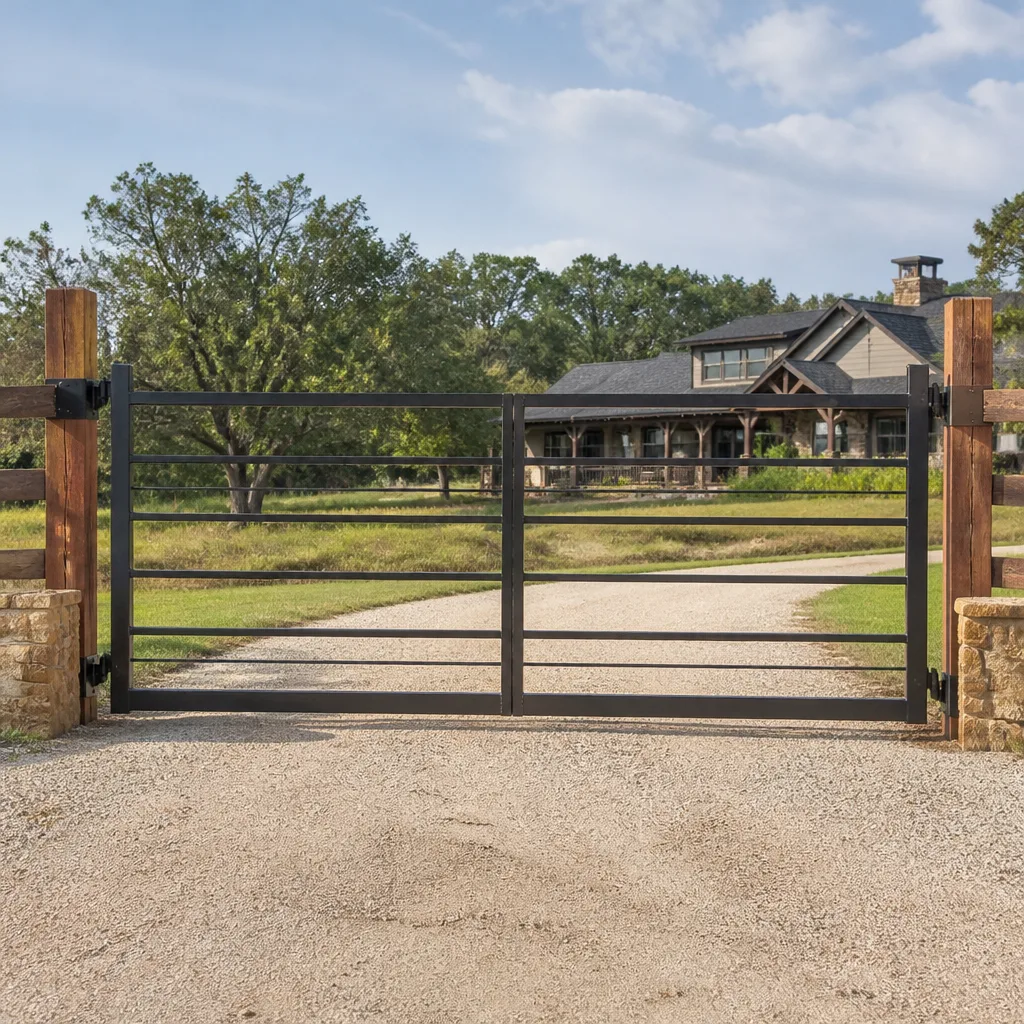 Farm & ranch
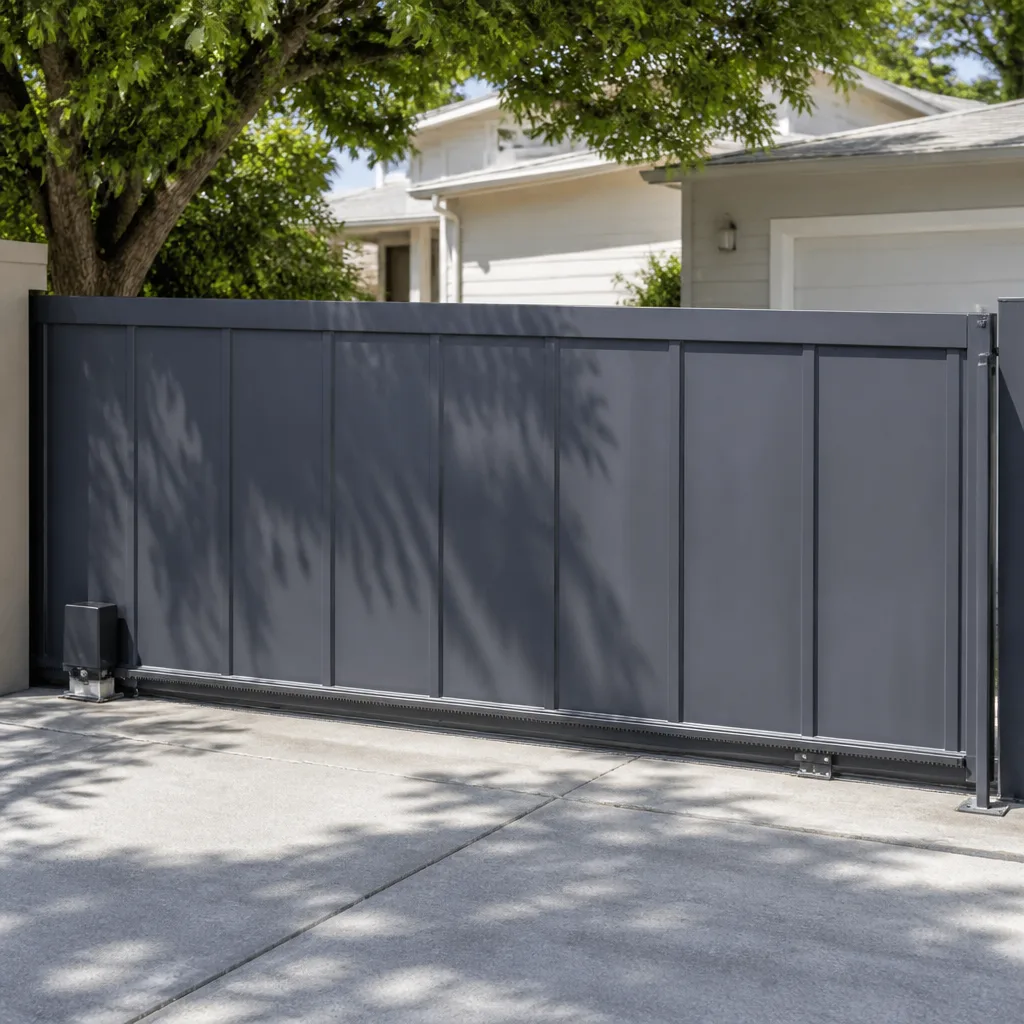 Sliding driveway gates
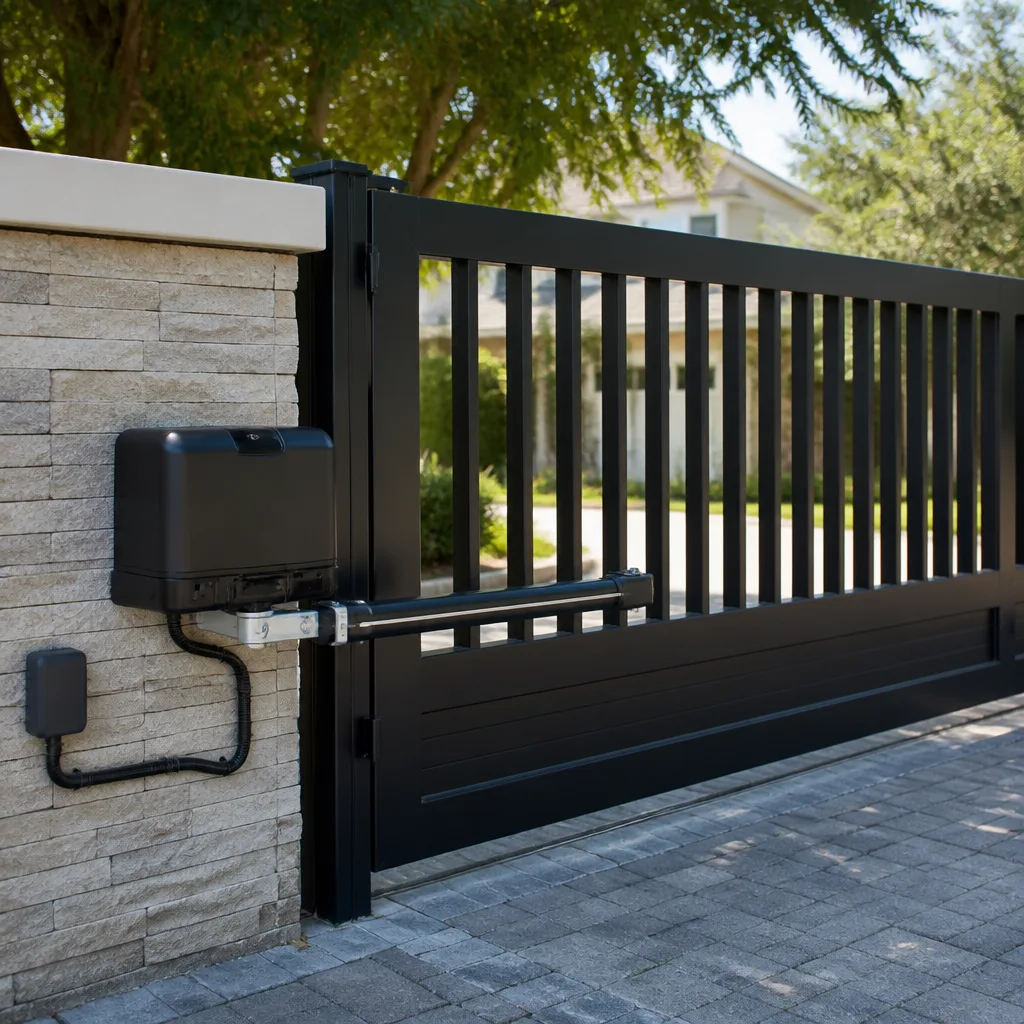 LiftMaster operators
Free on-site gate assessment - hinges, posts, and your LiftMaster or Nice gate operator checked before anything is quoted
The assessment is free and the quote is the invoice.
Get your free estimateThe Complete Guide to Gate Repair in San Antonio
A sagging gate hinge and a stripped gate operator look almost identical from the driveway. Both make the gate drag across the concrete, both make the motor whine, and both convince homeowners they need a new opener. But one fix costs around $85 and the other can run $450 or more, and diagnosing them wrong means paying for the wrong repair twice. In San Antonio, where clay soil shifts posts seasonally and summer heat bakes gate electronics, the diagnostic step is where money gets saved or wasted. This guide walks through the actual decision tree by gate type, material, and failure mode so you know what category of problem you have before anyone picks up a tool, or before you decide between DIY vs Professional Gate Repair: The San Antonio Homeowner’s Decision Guide.
Quick Answer
Gate Repair Cost Breakdown: The San Antonio Homeowner’s Reference for 2026 shows that gate repair in San Antonio typically costs between $85 and $1,200 depending on whether the problem is mechanical (hinges, latches, posts) or electrical (operator, control board, safety sensors). A dragging gate with a working motor is usually a hinge or post issue under $300, while a gate that won’t open at all is usually an electrical issue starting around $250. Most mechanical repairs take under two hours, and the exact price is always quoted in writing before work begins.
Styles & brands we work with
Table of Contents
- Why Gate Type Changes the Entire Repair Path
- San Antonio Soil and How It Damages Gate Posts
- Material-Specific Failure Patterns: Cedar, Aluminum, and Wrought Iron
- Visual Diagnostic Table: Symptom to Part to Cost
- Why Brand-Matched Components Matter for Electric Gates
- What a Documented Care Routine Protects You From
- The 365-Day Done Right Promise, Explained
- Common Mistakes to Avoid
- When to Call a Professional
- Frequently Asked Questions
Why Gate Type Changes the Entire Repair Path
Every gate comes down to two parts: the latch that holds it and the post that carries it. That’s the job we focus on at Latch and Post Gate Repair services. But between those two points, the repair path forks dramatically depending on what kind of gate you actually have. A wrought-iron swing gate on a limestone post fails differently than a cedar privacy gate on a concrete pad, and treating them as interchangeable leads to wrong diagnoses and wasted money.
Here’s the three-category breakdown we use when we walk a property in San Antonio:
- Swing gates: These pivot on hinges mounted to a post or wall. The weight of the gate pulls the post outward over time, especially on the clay soil we have across Bexar County. Most swing gate failures are either hinge wear, post lean, or latch misalignment from settled concrete.
- Slide gates: These ride on a track with rollers at the base. The failure points are the rollers, the track alignment, and the chain or belt drive. Slide gates tend to fail suddenly rather than gradually, often when a roller bearing seizes and the gate starts grinding sideways.
- Barrier or overhead gates: These are the vertical-pivot arms you see at the front of subdivisions or commercial properties. Their weak points are the articulation joints and the balance springs, and San Antonio’s temperature swings from 40 degrees in February to 105 in August stress every moving component.
In our experience, most San Antonio homeowners with a broken gate actually own a swing gate. They’re dramatically more common in residential neighborhoods like Alamo Heights, Terrell Hills, Stone Oak, and the older streets around Monte Vista and Olmos Park. And they’re also the gate type most vulnerable to the soil issues below.
If you’re not sure what kind of gate you have, that’s the first question we ask on the phone, because it changes which parts we bring and whether we can quote the repair over the phone or need to see it in person. For a deeper breakdown specific to swing gates and their repair paths, our Gate Repair in San Antonio page covers the mechanical side in more detail.
San Antonio Soil and How It Damages Gate Posts
San Antonio sits on a mix of blackland clay, caliche limestone, and loam depending on the exact location. The northwest side near Helotes and the Dominion tends toward rocky caliche, while the east and south sides around Converse, Kirby, and the Mission Reach have deeper clay layers. Both extremes create post problems, but in different ways.
Clay soil expands when wet and contracts when dry. That’s why your gate operates fine most of the year but drags in February and March, when winter rain saturates the ground and the post shifts forward by a quarter inch. Caliche, on the other hand, is a cement-like substrate that resists excavation but provides poor lateral grip for post anchors once the top layer of soil erodes. A post set in caliche may never sink, but it can lean if the concrete footing was shallow or the hole was bored too wide.
Here’s what we see, by gate material, on a regular basis across the city:
- Cedar gates: Cedar posts set directly into clay soil will lean within three to five years without a proper concrete collar. The wood absorbs moisture in the lower foot, softens, and then the leverage of the gate pushes the post forward slowly. By the time the gate drags, the post is usually soft enough to wobble by hand.
- Aluminum gates: Aluminum posts are less likely to rot but more likely to get yanked out of true by the gate’s weight if the footing was poured shallow. Aluminum gates are hollow, which also means they flex, and a flexing gate pulls the post in a pulsing rhythm every time the wind catches it.
- Wrought iron gates: Wrought iron is heavy. A standard 8-foot wrought iron drive gate can weigh 250 to 400 pounds. That weight, combined with clay soil movement, is why we see post heels separating from the concrete pad or the post itself bowing at the base. The post may be fine, but the anchorage gave up.
San Antonio’s summer heat also plays a role. A gate left in direct sun for six months will expand and contract enough that a latch set tight in January may not catch at all in August. Metal gates absorb heat, and a 120-degree surface temperature on a wrought iron gate changes the geometry slightly but enough to matter for a latch with a half-inch throat.
Material-Specific Failure Patterns: Cedar, Aluminum, and Wrought Iron
Every gate material fails in its own way. Knowing the failure pattern lets you predict the repair before a technician arrives, and it prevents the most common mistake we see: paying for an electrical fix when the problem is structural, or paying for a structural fix when the problem is just a worn hinge bushing.
Cedar Privacy Gates
Cedar gates need the most seasonal attention of the three materials. Cedar is soft and porous, which makes it great for privacy and terrible for hardware retention. The screws that hold the hinges back out as the wood fibers compress, which is why cedar gates sag. The fix is often as simple as longer, heavier screws and re-seating the hinge, but if the wood itself has rotted around the screw holes, the repair moves from $85 to $250 or more because the hinge needs to be relocated or the gate may need a new frame rail. Cedar gates on the north side near Timberwood Park and Bulverde see more water exposure and rot faster than the same gate in a dry, open yard south of Highway 90.
Aluminum Gates
Aluminum gates fail primarily at the welds and the hinges. Aluminum doesn’t rust, but it fatigues. Every open-close cycle flexes the gate slightly, and after 10 or 15 years the welds at the corners of the frame begin to crack. An aluminum gate that bounces or shakes when it closes is usually showing early weld fatigue, and catching it at that stage means a $150 to $300 weld repair instead of a $1,000-plus gate replacement. The hinge mounting tabs are the weak point; once one breaks, the gate twists and the remaining hinges fail in cascade.
Wrought Iron Gates
Wrought iron gates fail at the hinge barrels first. The iron rusts, the barrel loosens, and the gate drops. On older gates, especially in the historic neighborhoods around King William and Lavaca, we often see hinge barrels that are original to the gate and now 30 to 40 years old. Those gates are usually worth repairing because the metalwork is irreplaceable; the repair is a hinge rebuild or replacement and sometimes a post reinforcement, typically $200 to $450. Wrought iron gates also develop rust jacking at the base of the pickets, where rust expands inside the bottom rail and pops the pickets loose, something we see more often on San Antonio’s humid southeastern side.
Visual Diagnostic Table: Symptom to Part to Cost
Here’s the table we use to explain what’s wrong before we quote a repair. It’s based on the actual patterns we’ve documented across hundreds of San Antonio gate repairs since 2009.
Symptom to Likely Fix and Cost
| Symptom | Likely Part | Typical Fix | 2026 San Antonio Cost Range |
|---|---|---|---|
| Gate drags on the ground while motor sounds fine | Worn hinge bushing or settled post | Replace hinge bushing or shim/re-set post | $85 – $300 |
| Gate opens and closes on its own after half-closing | Bad safety sensor alignment or failing loop detector | Realign sensor, replace loop detector | $120 – $400 |
| Gate latch won’t catch | Misaligned latch from post shift or worn strike plate | Realign latch, replace strike plate | $85 – $200 |
| Gate bounces or shakes while closing | Fatigue cracks in frame or loose mounting tabs | Weld repair or reinforce mounting point | $150 – $350 |
| Grinding noise from motor but gate doesn’t move | Stripped operator gear or broken chain | Replace gear or chain, re-tension | $250 – $600 |
| Gate won’t respond at all, no LEDs on operator | Failed control board or power supply | Diagnose circuit, replace board or transformer | $280 – $800 |
| Gate opens slowly then stops halfway | Overloaded motor from dragging gate, or failing capacitor | Repair drag cause first, then replace capacitor | $120 – $400 |
| Post wobbles when you push it by hand | Rotted post base or failed footing | Replace post base, re-set post in new concrete | $200 – $500 |
These figures are ranges based on what we’ve quoted for similar jobs in San Antonio in the last year. The exact number you get from us is written down before any work starts, and it doesn’t change if the repair takes an extra hour or an extra trip to the parts house.
One caveat that matters: an operator that has been grinding against a dragging gate for weeks will eventually strip its own gear. If your gate drags, fix the drag. If you keep running the motor until it fails, you’re adding a $250 to $600 operator repair to a job that could have stopped at $85.
Why Brand-Matched Components Matter for Electric Gates
This is where electric gate repair in San Antonio goes sideways for a lot of homeowners: the operator is a Linear, but the replacement control board someone installs is a generic aftermarket part from a supply catalog. It may bolt into the same housing, but it doesn’t talk to the factory remote, the safety loops calibrate incorrectly, and three months later the gate stops responding to the keypad.
We’re factory-trained on the brands families actually own in this city: LiftMaster, FAAC, BFT, Linear, Viking, Ghost Controls, DoorKing, Elite, and Mighty Mule. When we repair a Linear operator, we source the Linear board, not a knockoff. The same goes for DoorKing slide gate chains and Ghost Controls transmitter modules. Generic parts fail at the connection points first, and that’s a pattern we’ve seen repeatedly in our repair work since 2009.
A real example from our service area: a homeowner on the northwest side had a Ghost Controls swing arm that wouldn’t close properly. The previous repair had used a generic limit switch, which worked for a month, then the switch drifted and the gate started slamming against the post. The replacement Ghost Controls limit assembly fixed it permanently. The cost difference between generic and brand-matched was about $40. The generic fix cost another service call and another round of damage to the gate frame. Brand matching isn’t a premium, it’s the cheaper path overall.
For homeowners with a gate that hasn’t been repaired before, or who bought a house with an unknown operator, the fastest way to get help is a phone call. We’ll ask you to check the brand name on the operator housing. The conversation takes five minutes and often saves a trip. If you’re deeper in the electrical weeds, our Electric Gate Repair in San Antonio page covers the operator-specific failure modes in more detail.
What a Documented Care Routine Protects You From
Here’s what separates a gate repair company from a handyman with a truck and a toolbox, and it’s the part most San Antonio homeowners don’t know to ask about. The difference is what happens inside the home while the repair happens outside.
Our technicians arrive in uniform, background-checked, and under a documented C.A.R.E. routine that’s been part of the Cedarwell way since 2009. Here’s what that means on a real job:
- Clean up like it is our own home. We lay drop cloths on the floor and put on shoe covers before we step inside. If the gate operator is wired through the garage or the laundry room, your floors stay clean. That’s not an upsell; it’s included every visit, no extra charge.
- Ask before we move or touch anything. If the control panel is behind a shelf, we ask before moving anything. If the circuit breaker is in a closet, we ask before we enter. No one touches a personal item without asking.
- Respect the family’s time and quiet hours. If you have a baby sleeping or a dog recovering from surgery in the next room, we can schedule around nap time. We choose pet-safe lubricants where there’s a choice, and we’ll tell you exactly what we used.
- Explain the price before the work. The written price is in your hand before any tool comes out. It covers the diagnostic, the parts, and the labor. If something changes during the repair, we stop and explain before proceeding.
We also take a photo of the cleanup before we leave. That photo matters because it gives you proof of the condition we left your home in, and it’s another reason our Google reviews in San Antonio frequently mention floors more often than gate hinges.
If you’re weighing a handyman against a specialist, the home-protection part is where the cost difference disappears. A handyman may charge $75 instead of $150 for the same hinge, but if the hinge fails again in six months or the crew tracks caliche dust across your living room, the real cost was higher. For a look at what a full replacement involves and how the same care routine applies to installation, our Gate Installation in San Antonio page walks through the process step by step.
The 365-Day Done Right Promise, Explained
Every gate we repair or install is covered by the 365-Day Done Right Promise. Here’s what that means in plain terms: if the repair or installation isn’t right, we make it right. No argument, no fine print, no “that failure isn’t covered.”
What triggers the promise: the same symptom comes back within a year, or a related component fails because our repair wasn’t done correctly. For example, if we replace a hinge and the gate sags again in four months because we used a bushing that was incorrectly sized, we come back and fix it at no charge. If we install a new operator and the limit adjustments drift, we correct it under the promise.
What the promise doesn’t cover: damage from weather events beyond normal wear (a car hitting the gate, a tree falling on it), replacement of parts that were not part of the original repair, and issues caused by someone else’s later work. That’s it. If we can’t explain exactly why something isn’t covered, we default to covering it.
The promise exists because the Cedarwell way of running a gate business is built on the idea that a gate should stay fixed. We’ve been operating in San Antonio since 2009, and the promise is the reason people call us back when a second gate on the property fails or when they move to a new house and inherit a different gate problem.
You don’t need to register the promise or file paperwork. It’s automatic. The job record is in our system, and we can see it when you call. If you ever have a question about whether something is covered, call (325) 252-5195 and ask for Cody Beckman. I’ll answer the phone or call you back the same day.
Common Mistakes to Avoid
- Ignoring a dragging gate because “the motor still works.” Every week a dragging gate runs, it’s wearing the operator gears and the hinge bushings at the same time. A $85 hinge fix becomes a $450 operator repair inside of two months. In San Antonio’s clay soil, the drag only gets worse through the wet season.
- Buying a generic control board for a brand-name operator. We covered this above, but it’s the most expensive $40 savings in gate repair. If your operator says Linear or DoorKing, the board should say the same thing.
- Lubricating a gate hinge with WD-40. WD-40 is a solvent, not a lubricant. It strips whatever grease remains and leaves the hinge dry. Use a proper lithium grease or have a technician do it as part of a regular tune-up.
- Adjusting the gate before fixing the post. A gate that won’t latch because the post has moved will never stay latched until the post is corrected. Adjusting the latch to compensate just moves the problem, and the gate usually ends up worse in a different way.
- Treating every estimate as equal without asking what’s included. The cheapest quote is often cheap because it skips the post reset, skips the brand-matched part, or doesn’t include the cleanup at all. Ask what exactly is included before you accept any number.
- Replacing a gate that should be repaired. Wrought iron gates from the 1980s and 1990s are often worth 3 to 5 times more than a new aluminum gate of the same size, and they can usually be rebuilt with new hinges and a proper post reset for a fraction of the replacement cost. We see homeowners in neighborhoods like Alamo Heights and Terrell Hills gut historic gates all summer and it’s a shame.
- Waiting until the gate fully fails to call. A gate that’s making new noises, moving differently, or responding slowly is telling you something. Early intervention is almost always under $200. Full operator replacement is almost always over $600.
When to Call a Professional
Call a professional when the gate has an electrical component you can’t identify, when the post is leaning more than a half inch from vertical, when the gate drags despite recent hinge replacement, or when you hear any grinding, clicking, or humming from the operator that wasn’t there before. Also call when your property has a multi-family gate, a commercial gate, or anything involving a safety loop: those are life-safety devices and they need a trained hand. Latch and Post Gate Repair San Antonio offers free estimates in San Antonio; call (325) 252-5195 and a live person will answer, any hour, any day.
Frequently Asked Questions
Gate repair in San Antonio ranges from about $85 for a minor hinge bushing replacement to $1,200 or more for a full operator and control board replacement. Most mechanical repairs (hinges, latches, post resets) fall between $85 and $400, while most electrical repairs fall between $250 and $800. The exact price is always quoted in writing before work begins, and that written number is what you pay.
For most mechanical repairs (hinges, latches, rollers), yes, same-day service is often available. We carry the common parts for Linear, Viking, Ghost Controls, and DoorKing operators on our trucks, which means many electric gate repairs are also completed same-day. If a part needs to be ordered, we’ll tell you the timeline before we leave. Call (325) 252-5195 and we’ll give you a straight answer on when we can arrive.
We repair LiftMaster, FAAC, BFT, Linear, Viking, Ghost Controls, DoorKing, Elite, and Mighty Mule operators. Those are the brands we’re factory-trained on, and we use brand-matched parts rather than generic replacements. If your operator is one of these and you’re in San Antonio, we can diagnose it over the phone in about five minutes.
Open the gate manually, using the release lever on the operator. If the gate drags, sticks, or feels heavy in the same spot every swing, the problem is mechanical: hinge, post, or roller. If the gate swings freely by hand but won’t move under power, the problem is electrical: operator, capacitor, control board, or safety sensor. This one test saves homeowners hundreds of dollars in wrong diagnoses every year in San Antonio.
Yes, we work on all three in San Antonio, and each material needs a different repair approach. Cedar gates need hinge re-seating and post inspection for rot. Aluminum gates need weld inspection and fatigue checks. Wrought iron gates need hinge barrel rebuilds and rust jacking prevention. The material dictates the parts and the method, which is why we ask on the phone what your gate is made of before we dispatch.
We serve all of San Antonio proper plus the surrounding communities: Alamo Heights, Terrell Hills, Stone Oak, Helotes, Converse, Kirby, Timberwood Park, and the neighborhoods around the Mission Reach and the northwest side. If you’re in Bexar County or just outside it, call us and we’ll tell you directly whether we can get to you this week.
The Bottom Line
A gate that drags, won’t latch, or won’t respond is usually fixable for less money than homeowners expect, but only if the diagnosis is right. San Antonio’s clay soil, summer heat, and the mix of gate materials across the city mean the fastest path to a permanent fix is understanding what kind of gate you have and what the specific failure pattern looks like. Armed with the symptom table and the material-specific notes above, you can describe your gate problem accurately on the phone, get a straight answer on cost, and avoid paying for the wrong repair. For more guides & resources, explore our blog. If you’d rather skip the homework and have someone look directly, call Latch and Post Gate Repair at (325) 252-5195. A live person answers, and the written estimate is free.
Written by Cody Beckman, Owner at Latch and Post Gate Repair San Antonio, serving San Antonio since 2009.
See the difference
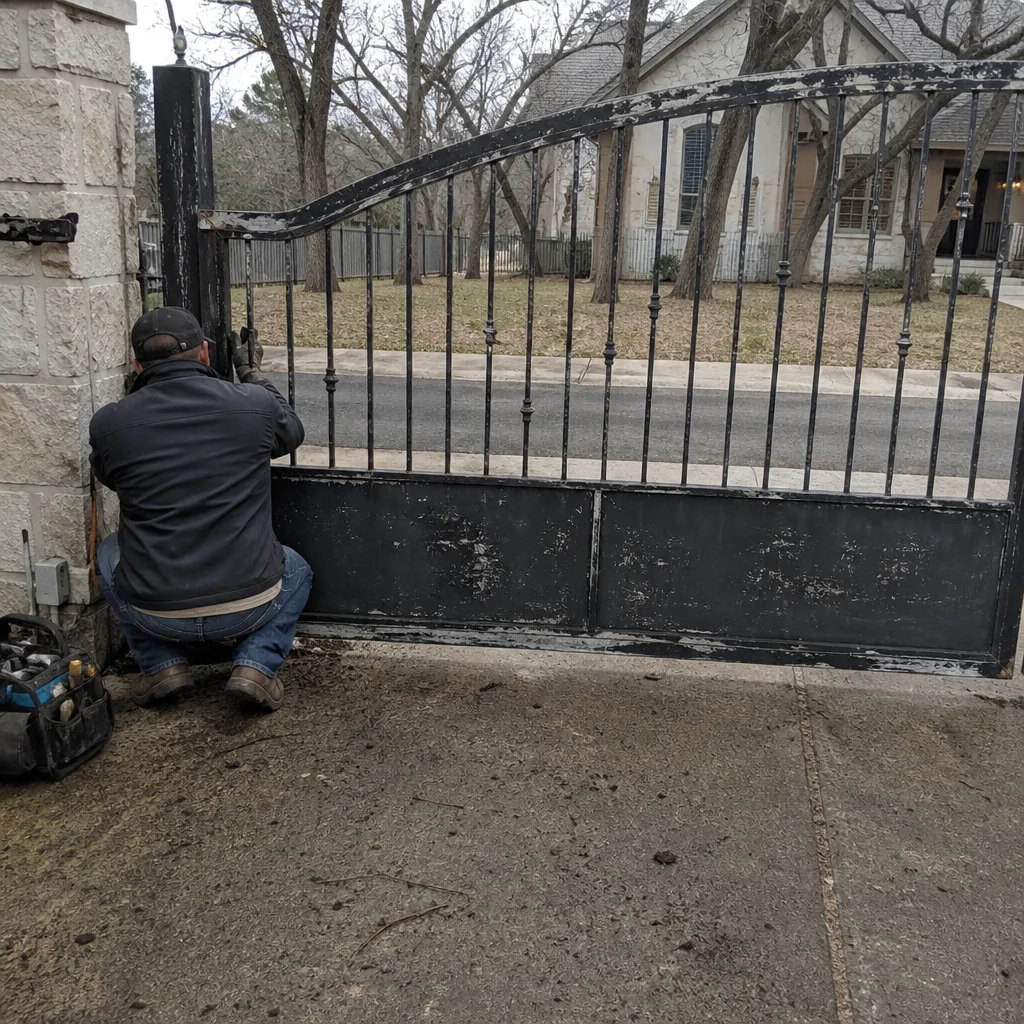 Before
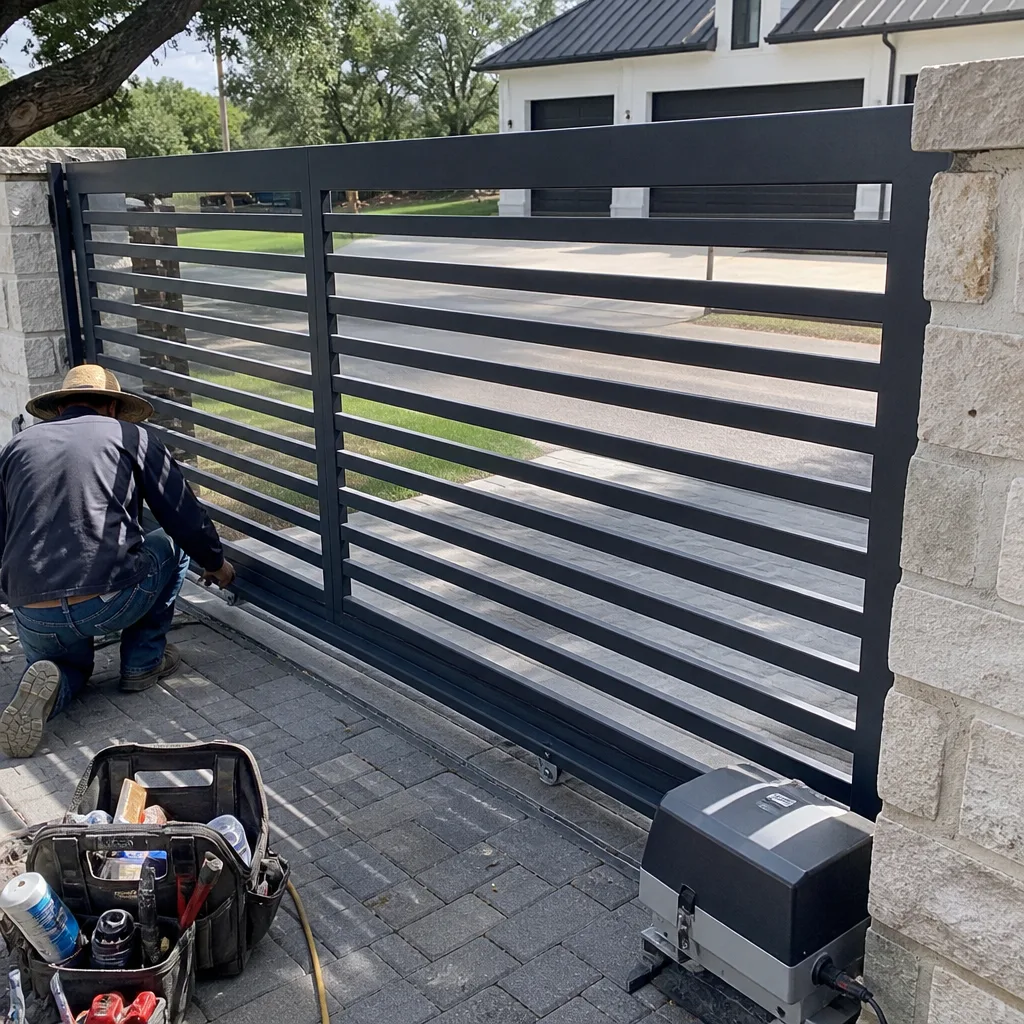 After
After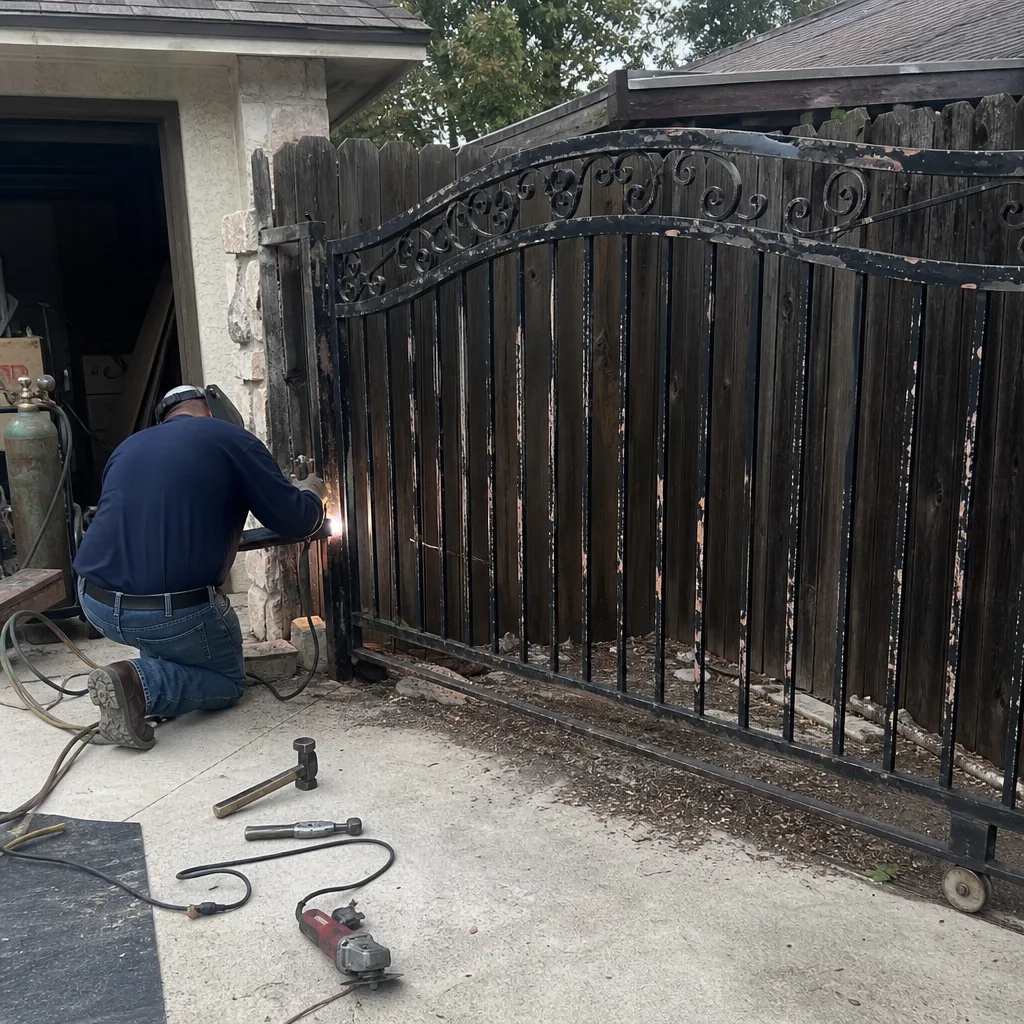 Before
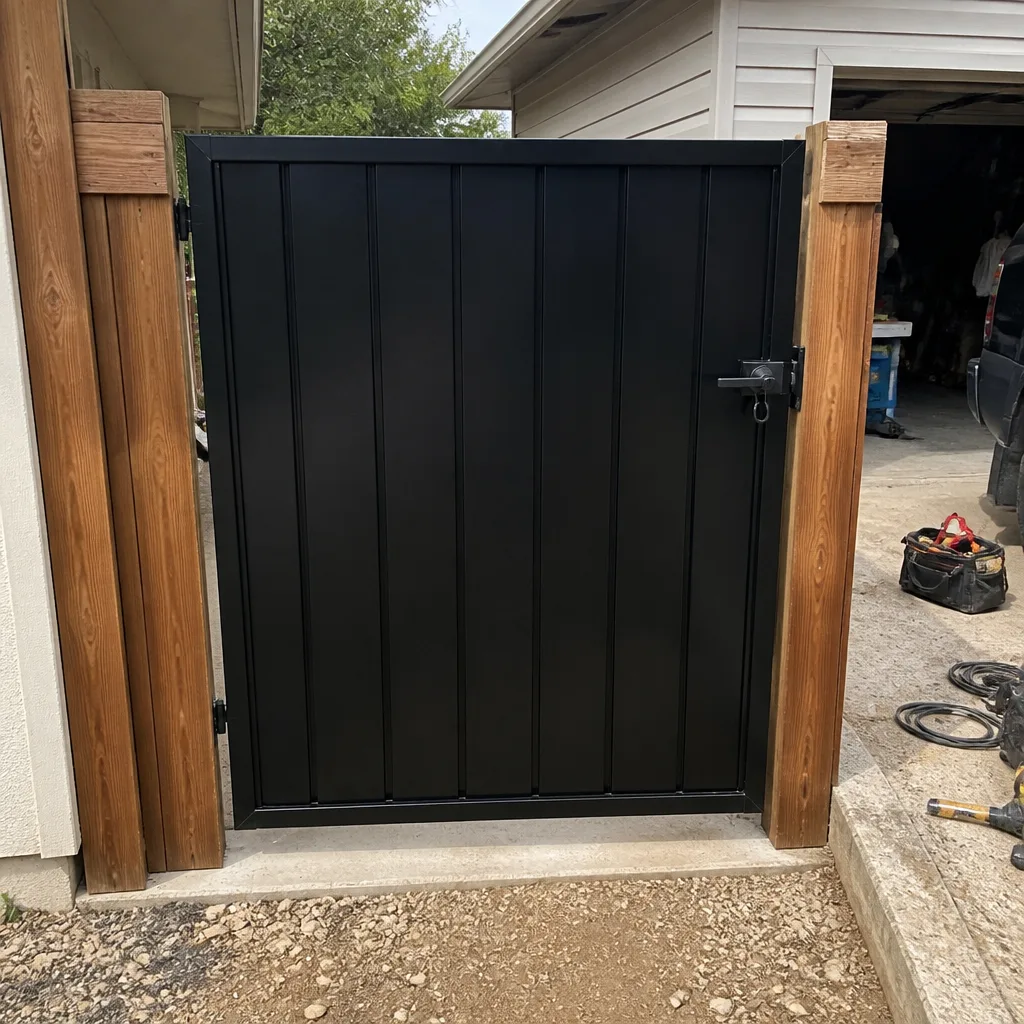 After
After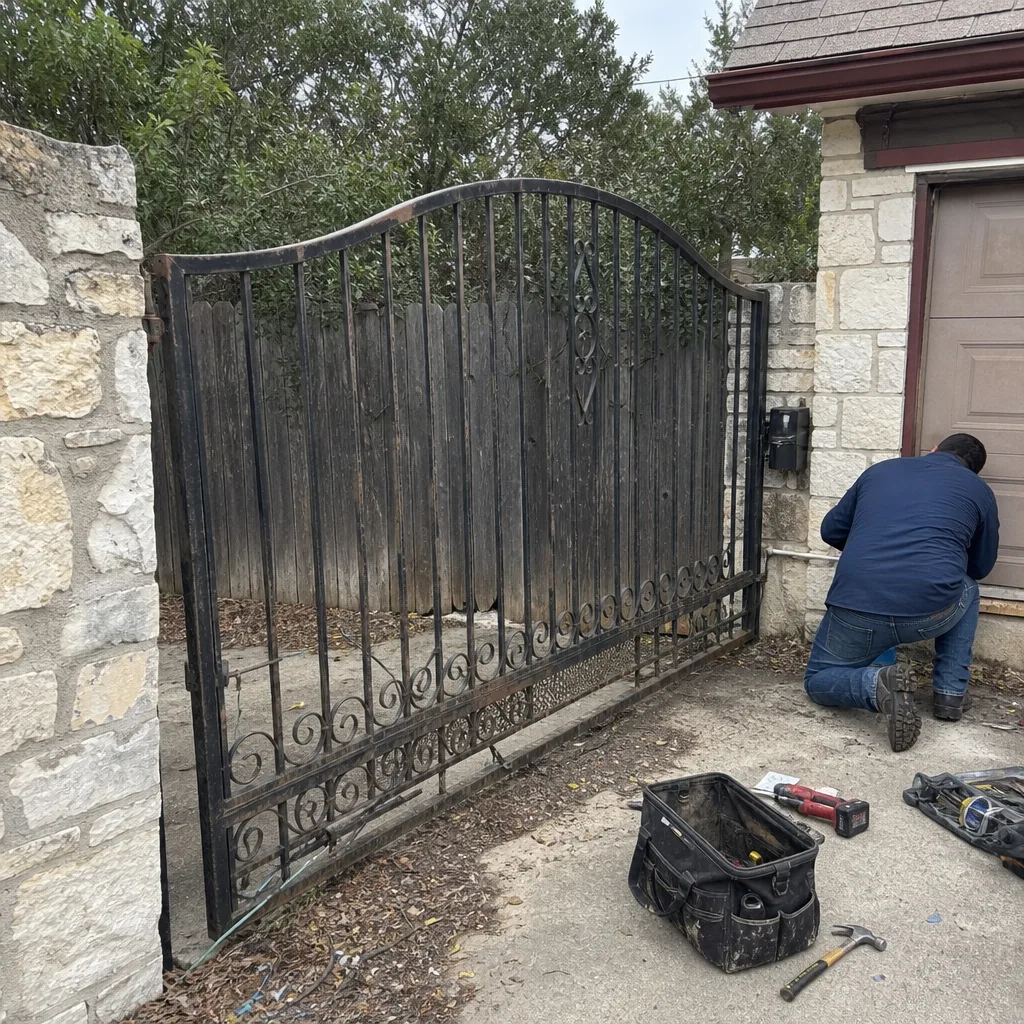 Before
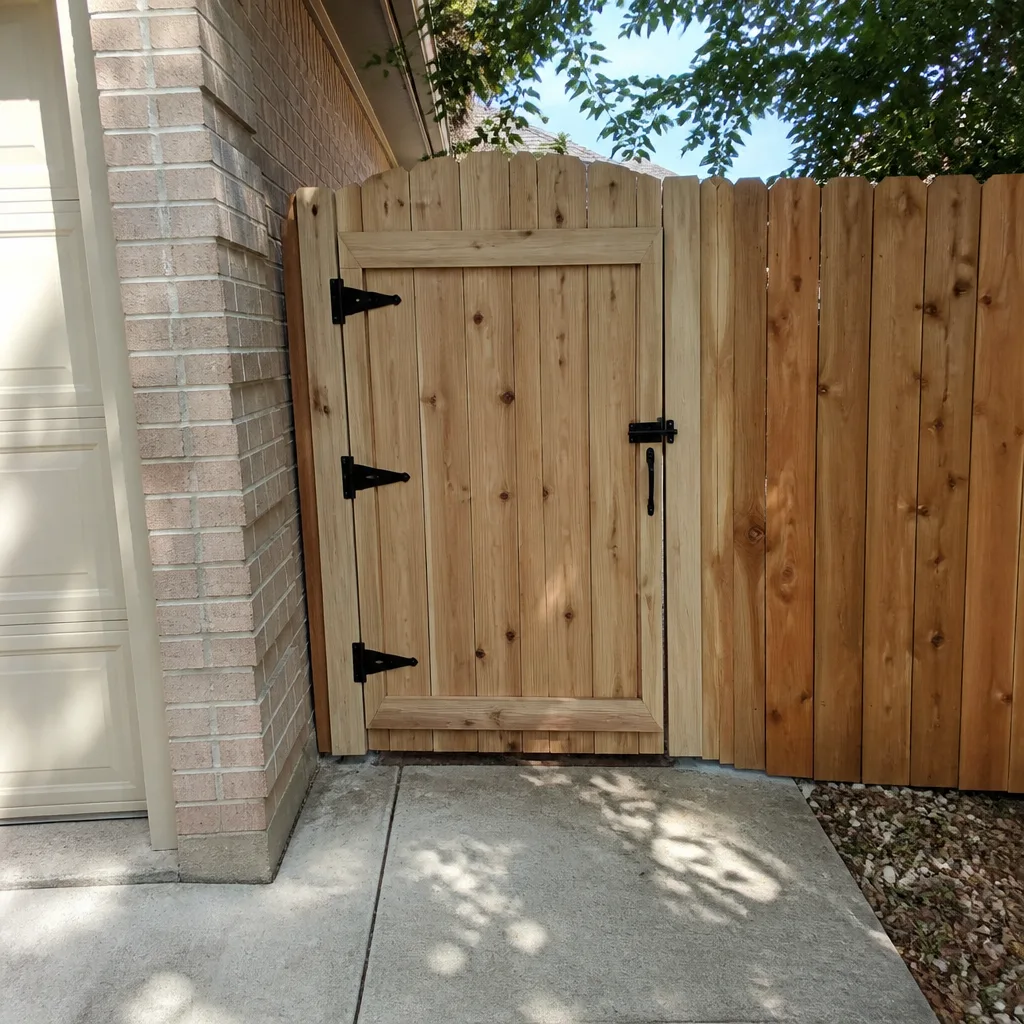 After
After